Development and Validation of a Multiplex Real-Time RT-PCR Panel for Simultaneous Detection of Porcine Epidemic Diarrhea Virus (PEDV), Transmissible Gastroenteritis Virus (TGEV), and Porcine Deltacoronavirus (PDCoV) in Fecal and Environmental Samples
By Dr. Zubair Khalid, DVM, MS, PhD ·
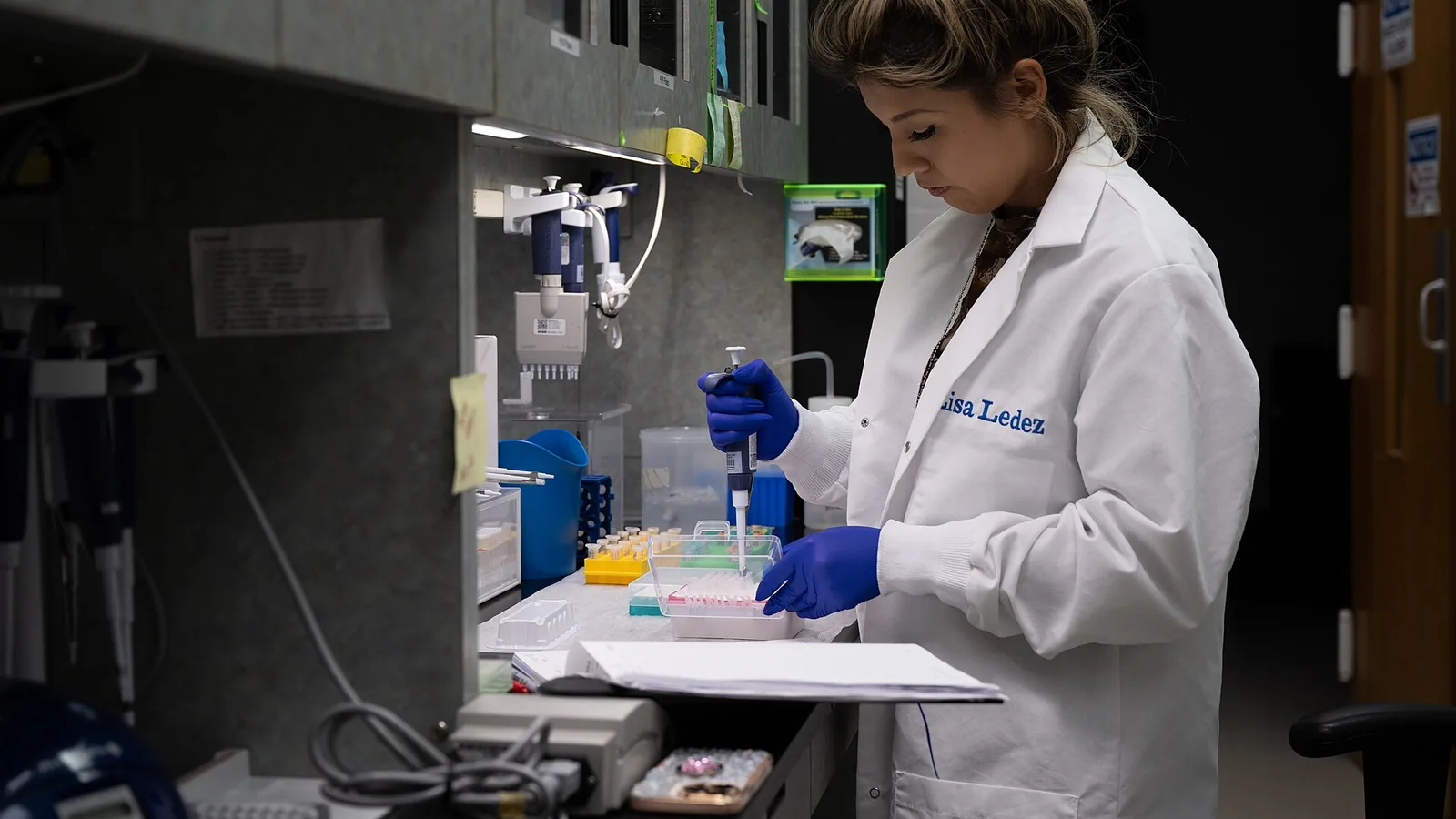
Key Takeaways
- A multiplex real-time RT-PCR panel has been developed for the simultaneous detection of Porcine Epidemic Diarrhea Virus (PEDV), Transmissible Gastroenteritis Virus (TGEV), and Porcine Deltacoronavirus (PDCoV) in swine fecal and environmental samples.
- The assay targets conserved regions of the nucleocapsid (N) gene for each virus, utilizing distinct fluorophores (e.g., FAM, HEX/VIC, Cy5/Texas Red) for spectral discrimination and achieving analytical limits of detection (LoD) between 15-25 RNA copies per reaction.
- An internal control (IC) is incorporated to monitor RNA extraction efficiency and detect PCR inhibitors, crucial for reliable diagnostics in complex matrices like feces and environmental swabs.
- The panel demonstrates high analytical specificity, with no cross-reactivity observed against other common porcine enteric and respiratory pathogens, and has shown diagnostic sensitivity and specificity exceeding 95% on field samples.
- The multiplex format significantly reduces assay time and cost, enabling efficient differential diagnosis of single and co-infections, which are frequently observed in swine herds experiencing acute gastroenteritis.
- The inclusion of environmental samples in the validation process highlights the assay's utility for farm biosecurity auditing and surveillance, aiding in the identification of contamination sources and informing decontamination strategies.
Introduction
Porcine enteric coronaviruses (PECs) constitute a major cause of acute gastroenteritis in swine, resulting in substantial economic losses worldwide [<a href="#ref-1">1</a>, <a href="#ref-2">2</a>]. Three principal viral agents within this group are Porcine Epidemic Diarrhea Virus (PEDV), Transmissible Gastroenteritis Virus (TGEV), and Porcine Deltacoronavirus (PDCoV) [<a href="#ref-2">2</a>]. These viruses primarily target the intestinal epithelium, leading to villous atrophy, malabsorptive diarrhea, and high mortality in neonatal piglets [<a href="#ref-3">3</a>, <a href="#ref-4">4</a>]. Co-infections with two or more of these pathogens are frequently observed in field settings, complicating clinical diagnosis and disease management [<a href="#ref-5">5</a>]. Rapid and accurate differential diagnosis is essential for implementing appropriate biosecurity measures and control strategies [<a href="#ref-6">6</a>].
Real-time reverse transcription polymerase chain reaction (RT-PCR) has become the gold standard for detecting RNA viruses due to its high sensitivity, specificity, and quantitative capability [<a href="#ref-7">7</a>]. Multiplex formats allow simultaneous detection of multiple targets in a single reaction, reducing time, cost, and sample volume [<a href="#ref-5">5</a>, <a href="#ref-6">6</a>]. This article provides an exhaustive technical description of the development and validation of a multiplex real-time RT-PCR panel designed for the simultaneous detection of PEDV, TGEV, and PDCoV in fecal and environmental samples from swine operations.
Primer and Probe Design
Target gene selection is critical for assay specificity and inclusivity. The nucleocapsid (N) gene and the spike (S) gene have been commonly employed for PEC detection [<a href="#ref-8">8</a>, <a href="#ref-9">9</a>]. For PEDV, conserved regions of the N gene have been targeted to avoid cross-reactivity with TGEV and PDCoV [<a href="#ref-8">8</a>, <a href="#ref-9">9</a>]. For TGEV, the N gene or the membrane (M) gene offers high conservation among circulating strains [<a href="#ref-10">10</a>]. For PDCoV, the N gene has been utilized in multiple diagnostic assays [<a href="#ref-11">11</a>, <a href="#ref-12">12</a>]. The multiplex panel described herein uses primer and probe sets directed against the N gene of each virus, as these regions exhibit sufficient genetic diversity between the three coronaviruses while remaining conserved within each species [<a href="#ref-6">6</a>].
The probes are labeled with distinct fluorophores: typically, FAM for PEDV, HEX or VIC for TGEV, and Cy5 or Texas Red for PDCoV, enabling spectral discrimination on a real-time instrument [<a href="#ref-5">5</a>]. Each probe is coupled with a non-fluorescent quencher (e.g., BHQ-1 or BHQ-2). Single-nucleotide polymorphisms (SNPs) in primer binding sites, as reported in field strains [<a href="#ref-13">13</a>], are accounted for by incorporating degenerate bases where necessary to maintain inclusivity [<a href="#ref-6">6</a>]. Bioinformatic analyses using sequence databases ensure that primer and probe sequences have minimal secondary structure and no significant homology to host genome or other porcine pathogens [<a href="#ref-5">5</a>, <a href="#ref-6">6</a>].
Assay Optimization
Multiplex balancing is required to achieve equivalent amplification efficiencies for all three targets [<a href="#ref-6">6</a>]. Primer concentrations are titrated in a matrix design, typically starting at 0.2 μM per primer and adjusted in 0.1 μM increments [<a href="#ref-5">5</a>]. Annealing temperature is optimized using a temperature gradient (e.g., 55°C to 65°C). The optimal annealing temperature is determined as the point yielding the lowest cycle threshold (Ct) values and highest fluorescence for each target without non-specific amplification [<a href="#ref-6">6</a>]. A representative optimization matrix is shown in Table 1.
| Optimization Parameter | Range Tested | Optimal Value |
|---|---|---|
| Annealing temperature | 55°C - 65°C | 60°C |
| PEDV primer concentration | 0.2 - 0.6 μM | 0.4 μM |
| TGEV primer concentration | 0.2 - 0.6 μM | 0.4 μM |
| PDCoV primer concentration | 0.2 - 0.6 μM | 0.5 μM |
| Probe concentration (each) | 0.1 - 0.3 μM | 0.2 μM |
| MgCl2 concentration | 3 - 6 mM | 4 mM |
Table 1. Multiplex RT-PCR optimization parameters and optimal conditions.
Reaction composition includes a one-step RT-PCR master mix containing reverse transcriptase and DNA polymerase, with final concentrations as reported in standard protocols [<a href="#ref-7">7</a>]. Thermal cycling conditions typically involve reverse transcription at 50°C for 30 minutes, initial denaturation at 95°C for 2 minutes, followed by 40 cycles of 95°C for 10 seconds and 60°C for 30 seconds (with fluorescence acquisition) [<a href="#ref-6">6</a>].
Internal Control and Extraction Efficiency
An internal control (IC) is incorporated into the multiplex panel to monitor RNA extraction efficiency and the presence of PCR inhibitors in fecal and environmental samples [<a href="#ref-6">6</a>]. A heterologous RNA template, such as an in vitro transcribed RNA derived from a non-porcine sequence (e.g., green fluorescent protein), is spiked into the lysis buffer before extraction [<a href="#ref-7">7</a>]. A separate primer-probe set labeled with a fluorophore distinct from the viral targets (e.g., ROX) is included in the multiplex reaction [<a href="#ref-5">5</a>]. Acceptable Ct values for the IC are defined a priori; samples with IC Ct values exceeding a predetermined threshold (e.g., >35) are flagged for potential inhibition or extraction failure [<a href="#ref-6">6</a>].
Extraction protocols for fecal and environmental swab samples require careful optimization. Fecal samples contain high levels of polysaccharides, bile salts, and other inhibitors that can compromise RNA recovery [<a href="#ref-14">14</a>]. Mechanical homogenization, use of a commercial silica membrane-based kit, and inclusion of a proteinase K digestion step improve RNA yield and purity [<a href="#ref-14">14</a>]. Environmental swabs (e.g., from pen floors, feed bins, transport vehicles) are collected in sterile phosphate-buffered saline and processed similarly [<a href="#ref-6">6</a>]. A mock sample containing a known concentration of the IC RNA is extracted in parallel to assess extraction efficiency across batches [<a href="#ref-5">5</a>].
Analytical Sensitivity and Specificity
Analytical sensitivity, expressed as the limit of detection (LoD), is determined using serial dilutions of in vitro transcribed RNA standards or titrated virus stocks [<a href="#ref-6">6</a>]. For each target, the LoD is defined as the lowest concentration at which 95% of replicate reactions yield a positive signal [<a href="#ref-5">5</a>]. Typical LoD values for optimized PEC multiplex RT-PCR assays range from 10 to 50 RNA copies per reaction [<a href="#ref-5">5</a>, <a href="#ref-6">6</a>]. The analytical performance metrics are summarized in Table 2.
| Target | LoD (copies/reaction) | Linear Range (log10 copies) | Amplification Efficiency (%) | R² |
|---|---|---|---|---|
| PEDV | 20 | 1.3 - 8.0 | 94 - 102 | >0.99 |
| TGEV | 15 | 1.2 - 8.0 | 96 - 103 | >0.99 |
| PDCoV | 25 | 1.4 - 8.0 | 91 - 99 | >0.99 |
Table 2. Analytical sensitivity and linearity for each target in the multiplex panel.
Analytical specificity is evaluated by testing the panel against a panel of other porcine enteric and respiratory viruses. These include porcine rotavirus groups A and C, porcine circovirus type 2 (PCV2), porcine reproductive and respiratory syndrome virus (PRRSV), porcine kobuvirus, porcine teschovirus, porcine sapelovirus, and porcine astrovirus [<a href="#ref-5">5</a>, <a href="#ref-6">6</a>]. No cross-reactivity is observed with any of these non-target pathogens [<a href="#ref-6">6</a>]. Additionally, the assay is tested against other coronaviruses such as bovine coronavirus and canine coronavirus; no amplification is noted, confirming the specificity of the primer-probe sets for PEDV, TGEV, and PDCoV [<a href="#ref-5">5</a>].
The possibility of false positives due to carryover contamination is mitigated by including no-template controls in each run and using separate areas for master mix preparation and sample addition [<a href="#ref-7">7</a>]. The use of uracil-DNA glycosylase (UDG) in the master mix can further prevent amplicon carryover [<a href="#ref-6">6</a>].
Diagnostic Performance on Field Samples
The multiplex panel is validated using a panel of fecal and environmental swab samples collected from swine farms with a history of diarrhea [<a href="#ref-5">5</a>, <a href="#ref-6">6</a>]. Sample types include diarrheic feces, rectal swabs, pen floor swabs, and fecal slurry from nursery and farrowing units. Each sample is tested with the multiplex panel and also with individual monoplex RT-PCR assays for each target as a reference standard [<a href="#ref-6">6</a>]. Discrepant results are resolved by sequencing of the amplified product [<a href="#ref-5">5</a>].
Diagnostic sensitivity and specificity are calculated. For PEDV, reported values exceed 95% for both sensitivity and specificity when compared to monoplex RT-PCR [<a href="#ref-5">5</a>, <a href="#ref-6">6</a>]. For TGEV and PDCoV, similar high performance is achieved, although prevalence may vary by region [<a href="#ref-2">2</a>, <a href="#ref-6">6</a>]. Co-infections are detected frequently; in one study, 15% of samples were positive for two or three viruses simultaneously [<a href="#ref-5">5</a>]. The ability to detect mixed infections is a key advantage of the multiplex format.
The inclusion of environmental samples is crucial for detecting subclinical shedding and assessing farm biosecurity [<a href="#ref-6">6</a>, <a href="#ref-7">7</a>]. Environmental surveillance using the multiplex panel can identify viral contamination of surfaces and equipment, thereby informing decontamination protocols [<a href="#ref-15">15</a>].
Workflow Overview
A flowchart summarizing the integrated experimental and analytical process is presented in Figure 1.
flowchart TD
 A["Sample Collection: fecal swabs, pen floor swabs"] --> B["RNA Extraction + Internal Control"]
 B --> C["One-Step Multiplex RT-PCR"]
 C --> D["Real-Time Detection & Ct Analysis"]
 D --> E{"IC Ct Acceptable?"}
 E -->|"Yes"| F{"Target Ct + Fluorescence"}
 F --> G["Interpretation: Positive, Negative, Weak Positive"]
 E -->|"No"| H["Re-extract / Dilute Sample"]
 H --> B
 G --> I["Report: PEDV / TGEV / PDCoV status"]
Figure 1. Decision workflow for multiplex RT-PCR detection of PEDV, TGEV, and PDCoV in fecal and environmental samples.
Discussion
The development of a multiplex real-time RT-PCR panel for PEDV, TGEV, and PDCoV addresses a critical diagnostic need in swine medicine [<a href="#ref-2">2</a>]. Co-circulation of these viruses is common, and clinical signs alone are insufficient for differentiation [<a href="#ref-1">1</a>, <a href="#ref-2">2</a>]. The assay's high sensitivity and specificity, combined with the inclusion of an internal control, ensure reliable results even in inhibitory sample types [<a href="#ref-6">6</a>, <a href="#ref-14">14</a>].
Primer and probe design against the N gene offers a balance between conservation and specificity [<a href="#ref-8">8</a>, <a href="#ref-9">9</a>]. However, continuous genetic surveillance is necessary to detect emerging variants that may escape detection [<a href="#ref-13">13</a>]. The use of degenerate bases and periodic sequence alignment updates is recommended [<a href="#ref-6">6</a>].
Multiplex assay optimization requires careful balancing of primer and probe concentrations to avoid competition between targets [<a href="#ref-5">5</a>]. The described protocol achieves comparable amplification efficiencies for all three viruses, allowing semi-quantitative estimation of viral load [<a href="#ref-6">6</a>]. Absolute quantification using standard curves is possible but requires controlled RNA standards.
The inclusion of environmental samples in validation expands the utility of the panel for surveillance and biosecurity auditing [<a href="#ref-7">7</a>, <a href="#ref-15">15</a>]. Environmental detection of PEC RNA can identify contamination sources before clinical outbreaks occur [<a href="#ref-7">7</a>]. The stability of coronaviruses in gastric fluid [<a href="#ref-15">15</a>] and their persistence on surfaces underscore the importance of sensitive environmental monitoring.
Differential diagnosis with other causes of neonatal diarrhea, such as porcine rotavirus [<a href="#ref-6">6</a>] and bacterial pathogens [<a href="#ref-16">16</a>], is facilitated by the specific detection of these three coronaviruses. For comprehensive herd health assessment, the multiplex panel can be used alongside other diagnostic assays, such as serological ELISA [<a href="#ref-11">11</a>, <a href="#ref-12">12</a>] or CRISPR-based detection [<a href="#ref-17">17</a>], depending on the clinical question.
Limitations of the assay include its inability to discriminate between viable and non-viable virus [<a href="#ref-15">15</a>]. RNA detection does not equate to infectivity. In vaccine monitoring contexts, differentiation of wild-type from vaccine strains may require additional genotyping assays [<a href="#ref-1">1</a>, <a href="#ref-18">18</a>]. However, for diagnostic and surveillance purposes, the multiplex RT-PCR panel provides robust and rapid results.
Conclusion
A validated multiplex real-time RT-PCR panel for simultaneous detection of PEDV, TGEV, and PDCoV in fecal and environmental samples has been developed and optimized. The assay demonstrates high analytical sensitivity (LoD 15-25 copies/reaction) and specificity with no cross-reactivity against common porcine enteric pathogens. Its multiplex capacity enables cost-effective and timely diagnosis of single and co-infections in swine populations. Incorporating an internal control ensures reliable detection in inhibitor-rich matrices. This panel represents a valuable tool for routine diagnostic workflows, outbreak investigations, and environmental surveillance in support of swine health management.