Flavobacterium psychrophilum: Etiology, Pathogenesis, and Control of Bacterial Cold-Water Disease in Salmonids
By Dr. Zubair Khalid, DVM, MS, PhD ·
Key Takeaways
- Flavobacterium psychrophilum is a Gram-negative bacterium responsible for economically significant bacterial cold-water disease (BCWD) and rainbow trout fry syndrome (RTFS) in salmonids, causing high mortality, particularly in juvenile stages.
- Transmission is primarily horizontal via water and contact, and vertically through contaminated eggs, with disease severity exacerbated by low water temperatures (<15°C) and persistence in the environment.
- Pathogenesis involves a multifactorial approach utilizing adhesins, proteases, iron acquisition systems (HfpR, BfpR), a critical type IX secretion system (T9SS), and outer membrane vesicles (OMVs) that modulate host immune responses.
- Diagnostic confirmation relies on culture on TYES or modified Anacker-Ordal agar, supplemented by PCR, MALDI-TOF MS, and serotyping for epidemiological tracking.
- Antimicrobial resistance is a significant concern, with high proportions of isolates exhibiting non-wild-type status for oxytetracycline, enrofloxacin, and oxolinic acid, often due to GyrA substitutions.
- Control strategies are multifaceted, including ongoing research into effective vaccines, promising phage therapy (especially via intraperitoneal administration), environmental management (e.g., salinity increase), and selective breeding for host genetic resistance.
Introduction
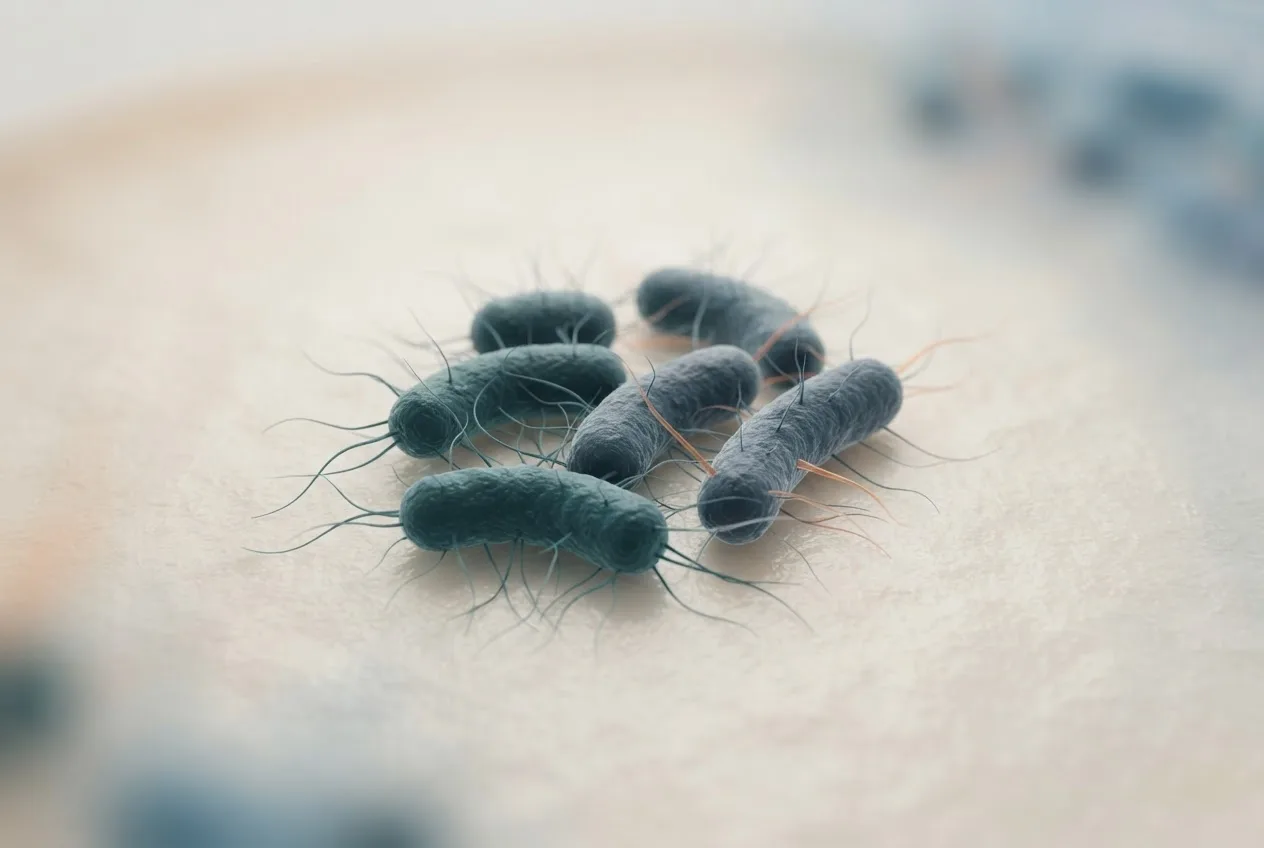
Flavobacterium psychrophilum is a Gram-negative, rod-shaped bacterium belonging to the family Flavobacteriaceae within the phylum Bacteroidetes [<a href="#ref-1">1</a>]. It is the etiological agent of bacterial cold-water disease (BCWD) and rainbow trout fry syndrome (RTFS), two of the most economically significant bacterial diseases affecting salmonid aquaculture worldwide [<a href="#ref-1">1</a>, <a href="#ref-2">2</a>, <a href="#ref-3">3</a>]. The pathogen causes high mortality, particularly in fry and fingerling stages, and leads to substantial losses in farmed rainbow trout (Oncorhynchus mykiss), Atlantic salmon (Salmo salar), coho salmon (Oncorhynchus kisutch), and other salmonids. F. psychrophilum has also been detected in non-salmonid species, including ayu (Plecoglossus altivelis) and Siberian sturgeon (Acipenser baerii), indicating a broader host range than originally recognized [<a href="#ref-4">4</a>].
The bacterium is transmitted horizontally through water and contact with infected fish, and vertically via contaminated eggs. Its ability to persist in aquatic environments for weeks, even under nutrient-limited conditions, facilitates farm-to-farm spread [<a href="#ref-5">5</a>]. The disease is exacerbated by low water temperatures (typically below 15°C), although outbreaks can occur at higher temperatures under certain conditions [<a href="#ref-2">2</a>]. Understanding the biology, virulence mechanisms, and epidemiology of F. psychrophilum is critical for developing effective control measures, including vaccines, phage therapy, and antimicrobial stewardship programs [<a href="#ref-1">1</a>, <a href="#ref-6">6</a>].
Taxonomy and Genomic Diversity
Flavobacterium psychrophilum is a member of the genus Flavobacterium, which includes other fish pathogens such as Flavobacterium columnare (causative agent of columnaris disease) [<a href="#ref-1">1</a>]. The species exhibits considerable genetic diversity, as revealed by multilocus sequence typing (MLST) and whole-genome sequencing [<a href="#ref-3">3</a>, <a href="#ref-7">7</a>]. Over 30 sequence types (STs) have been described, with some STs showing host specificity. For example, clonal complex CC-ST10 is commonly associated with rainbow trout, while CC-ST9 and CC-ST232 are linked to coho salmon and Atlantic salmon, respectively. A novel ST393 was identified from Coruh trout in Turkey, highlighting the ongoing discovery of new variants [<a href="#ref-3">3</a>].
The pan-genome of F. psychrophilum is open, with substantial accessory genome content that varies among isolates. Genomic analyses have identified serotypes 1, 2, 3, and 4 based on O-polysaccharide (O-PS) structure, with serotype 2 being predominant in many regions [<a href="#ref-7">7</a>, <a href="#ref-8">8</a>]. The O-PS locus contains genes encoding polysaccharide polymerases (Wzy1 and Wzy2) that determine linkage patterns and serological reactivity [<a href="#ref-8">8</a>]. Restriction-modification (R-M) systems are abundant in F. psychrophilum and contribute to genetic intractability; two conserved type II R-M systems (HpaII-like FpsJI and ScrFI-like FpsJVI) are present in most strains [<a href="#ref-6">6</a>]. Overcoming these barriers through pre-methylation of foreign DNA has enabled genetic manipulation and functional studies of virulence genes [<a href="#ref-6">6</a>].
Virulence Factors
The pathogenesis of F. psychrophilum is multifactorial, involving adhesins, secreted enzymes, iron acquisition systems, and outer membrane vesicles (OMVs) [<a href="#ref-1">1</a>]. Putative virulence factors include:
| Virulence Factor Class | Examples | Function | References |
|---|---|---|---|
| Adhesins | Cell surface proteins | Mediate attachment to host tissues | [<a href="#ref-1">1</a>] |
| Proteases | Elastinolytic, caseinolytic enzymes | Tissue degradation and invasion | [<a href="#ref-3">3</a>, <a href="#ref-7">7</a>] |
| Iron/heme transporters | HfpR, BfpR, HfpY | Heme/iron acquisition under host iron-limiting conditions | |
| Type IX secretion system (T9SS) | GldN, SprA | Secretion of adhesins and enzymes; required for virulence | [<a href="#ref-1">1</a>, <a href="#ref-6">6</a>] |
| Outer membrane vesicles (OMVs) | sRNAs, proteins, hydrolases | Modulation of host immune response, delivery of virulence factors | [<a href="#ref-9">9</a>] |
| Lipopolysaccharide (LPS) | O-polysaccharide | Serotype determination, immune evasion | [<a href="#ref-8">8</a>] |
The type IX secretion system is essential for virulence; deletion of the core component gldN in strain CSF259-93 abolished pathogenicity in rainbow trout [<a href="#ref-6">6</a>]. Two TonB-dependent heme/iron transport systems, HfpR and BfpR, are required for optimal growth under iron-limited conditions and for full virulence. The heme-binding protein HfpY contributes to host colonization and disease severity. OMVs from F. psychrophilum carry small RNAs (sRNAs) that are enriched in pathogenicity islands and can modulate host gene expression, including downregulation of suppressor of cytokine signalling 1 (SOCS1) and induction of phagosomal maturation pathways [<a href="#ref-9">9</a>]. A cell wall-associated hydrolase (CWH) is highly expressed in OMVs and is conserved across strains, suggesting a role in virulence.
Host Range and Clinical Signs
F. psychrophilum primarily affects salmonids, but has been reported in other fish species. The following table summarizes susceptible hosts and associated clinical presentations:
| Host Species | Disease Manifestation | Key Clinical Signs | References |
|---|---|---|---|
| Rainbow trout (Oncorhynchus mykiss) | RTFS, BCWD | Exophthalmia, skin ulcers, pale gills, splenomegaly, anemia | [<a href="#ref-10">10</a>] |
| Atlantic salmon (Salmo salar) | BCWD | Lethargy, dark skin, fin erosion, mortality in fry | |
| Coho salmon (Oncorhynchus kisutch) | BCWD | Ulcerative lesions, hemorrhages at fin bases | |
| Ayu (Plecoglossus altivelis) | BCWD | Hemorrhagic septicemia, increased mucus production | [<a href="#ref-4">4</a>] |
| Siberian sturgeon (Acipenser baerii) | Systemic infection | Proliferative branchitis, necrotizing dermatitis, myositis, thrombosis |
In rainbow trout, clinical signs of RTFS include exophthalmia, pale gills, ulcerative lesions on the mandible and ventral body, and enlarged spleen. Gill infections are associated with reduced lysozyme activity, decreased respiratory burst in phagocytes, and suppressed lymphocyte proliferation, indicating immune evasion mechanisms [<a href="#ref-10">10</a>]. Systemic infection leads to splenitis and activation of Toll-like receptor signaling pathways. Co-infections with other pathogens, such as infectious hematopoietic necrosis virus (IHNV) or Aeromonas salmonicida, result in synergistic increases in mortality and more severe histopathology [<a href="#ref-11">11</a>, <a href="#ref-12">12</a>].
Pathogenesis and Immune Response
Infection typically begins at the skin or gills, followed by systemic dissemination. The bacterium can survive and replicate within host macrophages, evading killing through suppression of respiratory burst and modulation of cytokine responses [<a href="#ref-10">10</a>]. Transcriptomic analyses of rainbow trout spleen after infection reveal upregulation of pattern recognition receptors, acute-phase proteins, complement components, and chemokines, with a more pronounced Th2-type response (IL-4/13a, GATA3) compared to Th1. In resistant genetic lines, expression of cytokines (IL-1, IL-2, IL-4/13, IL-6, IL-10, IL-17, IL-22) and antimicrobial peptides (cathelicidins, hepcidin) is significantly higher in the intestinal wall compared to susceptible lines [<a href="#ref-13">13</a>]. The gut microbiota also differs between resistant and susceptible fish, with higher alpha diversity in resistant fish before infection [<a href="#ref-13">13</a>].
Maternal immunity can be transferred from vaccinated broodstock to progeny. Vaccination of female rainbow trout with a live attenuated F. psychrophilum vaccine resulted in reduced mortality in fry challenged at 13 days post-hatch, associated with elevated mRNA transcripts of complement components C3 and C5 and rapid pro-inflammatory cytokine responses.
Diagnostic Methods
Diagnosis of F. psychrophilum infection relies on culture, molecular detection, and serological typing. The following Mermaid diagram outlines a diagnostic workflow:
flowchart TD
 A["Fish with clinical signs: ulcers, exophthalmia, anemia"] --> B["Post-mortem examination"]
 B --> C["Sampling: spleen, kidney, skin lesions"]
 C --> D["Culture on TYES agar or modified Anacker-Ordal agar"]
 D --> E["Incubation at 15-18°C for 3-5 days"]
 E --> F["Yellow-pigmented, gliding colonies"]
 F --> G["Gram-negative, filamentous rods"]
 G --> H["Confirmatory tests"]
 H --> I["PCR targeting 16S rRNA or specific genes"]
 H --> J["MALDI-TOF MS"]
 H --> K["Serotyping by multiplex PCR or monoclonal antibodies"]
 I --> L["Positive identification"]
 J --> L
 K --> L
 L --> M["Antimicrobial susceptibility testing (broth microdilution)"]
 M --> N["Treatment decision"]
Culture is performed on tryptone yeast extract salts (TYES) agar or modified Anacker-Ordal agar at 15-18°C for 3-5 days. Colonies are yellow-pigmented, gliding, and Gram-negative. Matrix-assisted laser desorption ionization time-of-flight mass spectrometry (MALDI-TOF MS) and nested PCR provide rapid confirmation. Multiplex PCR-based serotyping distinguishes serotypes 1-4. For epidemiological studies, MLST and whole-genome sequencing are used to identify STs and track transmission [<a href="#ref-3">3</a>, <a href="#ref-7">7</a>].
Non-invasive monitoring using fecal metagenomics and metabolomics has been explored in ayu. Increased relative abundances of F. psychrophilum, Cypionkella, and Klebsiella, along with elevated fecal cortisol, glucose, and acetate, were detected as early as 4 days post-infection [<a href="#ref-4">4</a>].
Antimicrobial Resistance
Antimicrobial resistance (AMR) in F. psychrophilum is a growing concern. Phenotypic susceptibility testing using broth microdilution (Clinical and Laboratory Standards Institute guidelines) has revealed high proportions of non-wild-type (NWT) isolates for oxytetracycline, enrofloxacin, and oxolinic acid in many regions [<a href="#ref-7">7</a>, <a href="#ref-14">14</a>]. The following table summarizes AMR profiles from recent studies:
| Antimicrobial | % NWT (Slovenia) [<a href="#ref-14">14</a>] | % NWT (Czech Republic) | Resistance Mechanism |
|---|---|---|---|
| Oxytetracycline | 86.3% | High proportion | Not fully elucidated |
| Enrofloxacin | 86.3% | High proportion | GyrA substitutions (T83A, T83V) |
| Oxolinic acid | 90.2% | High proportion | GyrA substitutions |
| Florfenicol | 0% (all WT) | Most WT, but MIC at breakpoint | No known resistance genes |
| Erythromycin | 0% (all WT) | Most WT | Not reported |
| Sulfamethoxazole-trimethoprim | Not tested | Most WT | Not reported |
In Korean isolates, resistance to oxolinic acid and sulfamethoxazole/trimethoprim was observed, while enrofloxacin remained effective. Pharmacokinetic/pharmacodynamic modeling of enrofloxacin in rainbow trout has been performed to optimize dosing against F. psychrophilum and other pathogens. No acquired AMR genes were detected in whole-genome sequencing of Slovenian isolates beyond gyrA mutations, suggesting that resistance is primarily due to chromosomal mutations rather than horizontal gene transfer [<a href="#ref-14">14</a>].
Control Strategies
Vaccination
Despite extensive efforts, no commercial vaccine is widely available for F. psychrophilum [<a href="#ref-1">1</a>]. Experimental vaccines include live attenuated strains (e.g., Fp B.17-ILM) and bacterins, but efficacy has been variable. Broodstock vaccination can confer maternal immunity to fry, reducing mortality after early challenge. The development of genetic tools, including pre-methylation systems for DNA transfer, has enabled construction of defined deletion mutants (e.g., gldN) that are attenuated and could serve as live vaccine candidates [<a href="#ref-6">6</a>].
Phage Therapy
Bacteriophages specific to F. psychrophilum (e.g., FpV4, FpV9, FPSV-D22, FPSV-S20) have been isolated and characterized. In vitro evolution can improve phage host range and adsorption. In vivo, intraperitoneal injection of a two-component phage mixture (FpV4 and FPSV-D22) significantly increased survival (80.0% vs. 56.7% in controls) when administered 3 days after bacterial challenge. Oral and bath delivery methods were less effective, likely due to insufficient phage dosage. Phage therapy also alters the gut microbiota, with increased lactic acid bacteria observed 33 days post-infection.
Environmental Management
Increasing water salinity to 1% (10 g/L) delayed the onset of RTFS and improved survival in cohabitation challenge experiments (42.6% vs. 17.9% in controls) [<a href="#ref-2">2</a>]. Elevated water temperature (18°C) reduced incubation time but did not prevent disease [<a href="#ref-2">2</a>]. The presence of organic substrates (raceway detritus, feed) enhances environmental persistence of F. psychrophilum, highlighting the importance of farm hygiene [<a href="#ref-5">5</a>].
Probiotics and Microbiome Manipulation
Skin bacteria from rainbow trout, such as Bosea sp. OX14 and Flavobacterium sp. GL7, produce antagonistic compounds (<3 kDa) that inhibit F. psychrophilum growth. These bacteria constitute a small fraction of the skin microbiome but could be enriched as a probiotic strategy.
Co-Infections
Co-infection with other pathogens exacerbates disease. F. psychrophilum and IHNV co-infection in masu salmon resulted in 90-100% mortality, earlier onset of disease, and altered proteomic profiles involving pentose-phosphate and fructose metabolism [<a href="#ref-11">11</a>]. Co-infection with Aeromonas salmonicida in rainbow trout led to higher mortality, more severe histopathology in liver and muscle, and activation of the p53 apoptotic pathway [<a href="#ref-12">12</a>]. These findings underscore the need for comprehensive disease management strategies that account for multiple pathogens [<a href="#ref-11">11</a>, <a href="#ref-12">12</a>].
Host Genetics and Selective Breeding
Genetic resistance to F. psychrophilum is heritable. A quantitative trait locus (QTL) on chromosome 25 has been validated in rainbow trout, and marker-assisted selection has produced lines with high (HR) and low (LR) resistance [<a href="#ref-13">13</a>]. HR fish exhibit stronger intestinal immune responses and distinct gut microbiota composition [<a href="#ref-13">13</a>]. Shedding kinetics studies show that resistance (survival) does not correlate with transmission blocking; 67% of fish that shed bacteria showed no clinical disease, indicating that asymptomatic carriers contribute to spread [<a href="#ref-15">15</a>]. Exposure dosage influences shedding magnitude, ranging from 10^3 to 10^8 cells fish^-1 h^-1 [<a href="#ref-15">15</a>].
FAQ
What is the primary disease caused by Flavobacterium psychrophilum in salmonids?
Flavobacterium psychrophilum causes bacterial cold-water disease (BCWD) and rainbow trout fry syndrome (RTFS), both characterized by ulcerative lesions, exophthalmia, and high mortality in young fish [<a href="#ref-1">1</a>, <a href="#ref-2">2</a>].
How is Flavobacterium psychrophilum transmitted?
Transmission occurs horizontally through water and direct contact with infected fish, and vertically via contaminated eggs.
What are the key virulence factors of Flavobacterium psychrophilum?
Key virulence factors include the type IX secretion system, heme/iron transporters (HfpR, BfpR, HfpY), outer membrane vesicles carrying small RNAs, and lipopolysaccharide O-polysaccharide [<a href="#ref-6">6</a>, <a href="#ref-8">8</a>, <a href="#ref-9">9</a>].
Which fish species are susceptible to Flavobacterium psychrophilum?
Susceptible species include rainbow trout, Atlantic salmon, coho salmon, ayu, and Siberian sturgeon, among others [<a href="#ref-4">4</a>].
How is Flavobacterium psychrophilum diagnosed?
Diagnosis involves culture on TYES agar, PCR targeting 16S rRNA, MALDI-TOF MS, and serotyping by multiplex PCR [<a href="#ref-7">7</a>].
What antimicrobial resistance patterns are common in Flavobacterium psychrophilum?
High proportions of isolates are non-wild-type for oxytetracycline, enrofloxacin, and oxolinic acid, often due to GyrA substitutions; florfenicol and erythromycin remain effective [<a href="#ref-7">7</a>, <a href="#ref-14">14</a>].
Are there effective vaccines against Flavobacterium psychrophilum?
No commercial vaccine is widely available, but experimental live attenuated vaccines and broodstock vaccination show promise [<a href="#ref-1">1</a>].
Can phage therapy control Flavobacterium psychrophilum infections?
Intraperitoneal injection of specific bacteriophages significantly reduces mortality, but oral and bath delivery require optimization.
Does water salinity affect Flavobacterium psychrophilum infection?
Increasing salinity to 1% delays disease onset and improves survival in rainbow trout fry [<a href="#ref-2">2</a>].
Is there genetic variation in host resistance to Flavobacterium psychrophilum?
Yes, a QTL on chromosome 25 in rainbow trout is associated with resistance, and selective breeding can produce resistant lines [<a href="#ref-13">13</a>].
Related Clinical & Scientific Guides
- Duck Diseases: A Comprehensive Overview for Veterinary Practitioners
- Salmonella Dublin in Cattle: Emerging Pathogen, Diagnostic Challenges, and Public Health Impact
- Mycoplasma Infections in Poultry: Vaccination Strategies and Control Programs