Bacterial Contamination in Poultry Products: Risks from Chicken and Duck Meat
By Dr. Zubair Khalid, DVM, MS, PhD ·
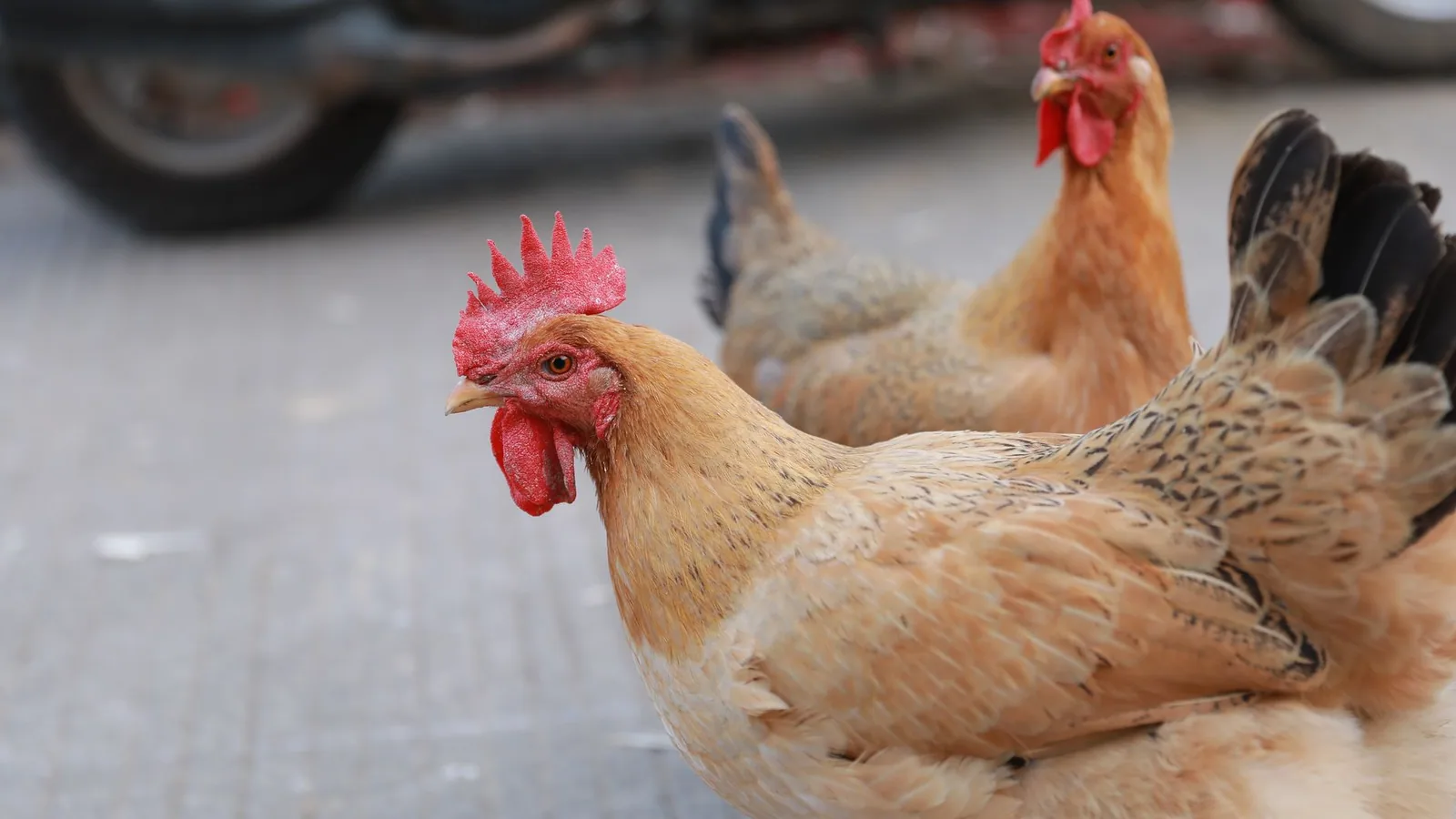
Key Takeaways
- Salmonella enterica and Campylobacter jejuni are primary zoonotic pathogens in chicken and duck meat, colonizing the avian intestinal tract and contaminating carcasses via fecal shedding during processing.
- Shiga toxin-producing Escherichia coli (STEC) and Listeria monocytogenes pose significant risks; STEC are often linked to avian pathogenic E. coli (APEC) clones, while L. monocytogenes contaminates processing environments and can grow at refrigeration temperatures.
- Chicken feet present a heightened contamination risk due to their complex surface morphology and handling, harboring a broad spectrum of enteric bacteria including Salmonella, Campylobacter, and E. coli.
- Thermal inactivation of vegetative bacteria like Salmonella and Campylobacter requires an internal meat temperature of at least 74°C (165°F) for 15 seconds; however, preformed heat-stable toxins from Staphylococcus aureus are not destroyed by cooking.
- Ducks carry distinct zoonotic agents beyond common poultry pathogens, including Riemerella anatipestifer and Pasteurella multocida, with their higher fat content potentially offering some bacterial protection during cooking.
- Cross-contamination in the kitchen is a critical transmission route, with pathogens surviving on surfaces and being transferred to ready-to-eat foods via raw poultry juices or contaminated utensils and hands.
Introduction
Bacterial contamination of poultry products remains a persistent challenge in veterinary public health and food safety. Chicken and duck meat are frequently implicated in foodborne outbreaks globally, with pathogens such as Salmonella enterica, Campylobacter jejuni, and Shiga toxin-producing Escherichia coli (STEC) being the most commonly identified agents [<a href="#ref-1">1</a>]. The microbiological hazards associated with poultry products are not limited to muscle tissue; they extend to secondary products such as broth and chicken feet, each presenting unique contamination ecologies [<a href="#ref-2">2</a>]. Understanding the biological, chemical, and physical mechanisms governing bacterial persistence, thermal inactivation, and cross-contamination is essential for designing effective control strategies [<a href="#ref-3">3</a>]. This article provides an exhaustive examination of bacterial risks from chicken and duck meat, focusing on pathogen biology, contamination sources, cooking efficacy, and zoonotic implications, with particular attention to the topics of chicken broth bacteria, the question of what bacteria do ducks carry, the hygiene of chicken feet germs, and the practical query of whether frying chicken kills bacteria.
Major Bacterial Pathogens in Poultry Meat
Salmonella enterica
Salmonella is a gram-negative, facultative anaerobic rod belonging to the Enterobacteriaceae family [<a href="#ref-1">1</a>]. It colonizes the intestinal tract of poultry asymptomatically and is shed in feces, leading to contamination of feathers, skin, and carcasses during slaughter [<a href="#ref-2">2</a>]. Over 2,500 serovars exist, with Salmonella Enteritidis and Salmonella Typhimurium being most frequently associated with poultry products [<a href="#ref-4">4</a>]. The pathogen's ability to form biofilms on processing equipment enhances its persistence in the food chain [<a href="#ref-1">1</a>]. In chicken broth, Salmonella can survive if the broth is not brought to a sufficient internal temperature, representing a distinct risk category for chicken broth bacteria [<a href="#ref-2">2</a>]. Cross-contamination from raw poultry to ready-to-eat items in the kitchen is a primary transmission route [<a href="#ref-3">3</a>].
Campylobacter jejuni
Campylobacter jejuni is a microaerophilic, thermophilic, gram-negative spiral bacterium and the leading cause of bacterial gastroenteritis in many developed countries [<a href="#ref-1">1</a>]. Poultry, particularly chicken, is the primary reservoir, with intestinal carriage rates often exceeding 80% in commercial flocks [<a href="#ref-2">2</a>]. The bacterium is highly motile via polar flagella and can survive in surface water and on processing surfaces [<a href="#ref-4">4</a>]. Unlike Salmonella, Campylobacter does not multiply at refrigeration temperatures but can remain viable for extended periods [<a href="#ref-3">3</a>]. The organism is particularly sensitive to freezing and drying but is readily inactivated by proper cooking [<a href="#ref-1">1</a>]. Duck meat also harbors Campylobacter, a fact directly relevant to the question of what bacteria do ducks carry [<a href="#ref-2">2</a>].
Escherichia coli
Pathogenic strains of E. coli, including Shiga toxin-producing E. coli (STEC) such as O157:H7, are significant contaminants of poultry products [<a href="#ref-1">1</a>]. Avian pathogenic E. coli (APEC) strains cause colibacillosis in flocks, while certain APEC clones have zoonotic potential [<a href="#ref-5">5</a>]. E. coli contamination occurs primarily through fecal contact during processing [<a href="#ref-2">2</a>]. The organism is a major indicator of fecal hygiene [<a href="#ref-3">3</a>]. Detailed discussion of E. coli in poultry is provided in the article Escherichia coli in Chickens and Poultry Products: Bacterial Pathogenesis, Contamination Routes, Clinical Signs in Flocks, and Public Health Risks.
Listeria monocytogenes
Listeria monocytogenes is a gram-positive, psychrotrophic bacterium capable of growing at refrigeration temperatures, making it particularly problematic in ready-to-eat poultry products [<a href="#ref-1">1</a>]. It is ubiquitously present in processing environments and can colonize drains, conveyors, and chilling systems [<a href="#ref-2">2</a>]. Although less prevalent than Salmonella or Campylobacter, listeriosis carries a high mortality rate, especially in immunocompromised individuals [<a href="#ref-4">4</a>]. The pathogen is readily killed by heating to 74°C but can survive in post-processing environments if sanitation fails [<a href="#ref-3">3</a>].
Other Pathogens
Staphylococcus aureus is a commensal of poultry skin and can be introduced during handling, including contact from human carriers [<a href="#ref-1">1</a>]. It produces heat-stable enterotoxins that may persist even after the bacteria are killed by cooking, a critical consideration when evaluating whether frying chicken kills bacteria and their toxins [<a href="#ref-2">2</a>]. Clostridium perfringens is an anaerobic spore-former that can proliferate in poultry products that are improperly cooled, causing toxin-mediated illness [<a href="#ref-3">3</a>]. In duck products, Riemerella anatipestifer and Pasteurella multocida are more commonly associated with disease in the birds themselves but can pose zoonotic risks through direct contact, an important component of what bacteria do ducks carry [<a href="#ref-4">4</a>].
Bacterial Contamination in Chicken and Duck Meat: Sources and Routes
Slaughter and Processing
Bacterial contamination of poultry meat begins at the farm level and is amplified during slaughter and processing [<a href="#ref-1">1</a>]. The primary source is fecal material from colonized birds, which may contaminate feathers and skin during transport and shackling [<a href="#ref-2">2</a>]. During scalding, defeathering, evisceration, and chilling, bacteria are transferred between carcasses via water baths, mechanical fingers, and conveyor belts [<a href="#ref-3">3</a>]. Immersion chilling in chlorinated water can reduce bacterial loads, but the efficacy depends on contact time and organic matter content [<a href="#ref-4">4</a>]. Duck processing presents additional challenges due to the higher fat content of duck skin, which can protect bacteria from thermal and chemical treatments [<a href="#ref-2">2</a>].
Cross-Contamination in the Kitchen
Cross-contamination from raw poultry to cutting boards, utensils, and hands is a major contributor to foodborne illness [<a href="#ref-1">1</a>]. Salmonella and Campylobacter can survive for hours on dry surfaces and can be transferred to salads, vegetables, or cooked foods without direct contact via raw juices [<a href="#ref-3">3</a>]. This risk is particularly acute when handling chicken feet, which have intricate skin folds and nails that trap organic material. Chicken feet germs include a broad mix of enteric bacteria and environmental contaminants, and studies have shown that washing feet under running water is insufficient to remove pathogens [<a href="#ref-2">2</a>]. Proper hand hygiene and separate cutting boards are essential [<a href="#ref-4">4</a>].
Chicken Broth Bacteria
Chicken broth, whether homemade or commercially prepared, presents a distinct risk environment [<a href="#ref-1">1</a>]. If broth is made by simmering raw chicken, the initial thermal step kills vegetative bacteria, but post-cooking contamination can occur if the broth is not refrigerated promptly or is stored improperly [<a href="#ref-2">2</a>]. Clostridium perfringens spores can survive boiling and then germinate if the broth is held between 30°C and 50°C for extended periods [<a href="#ref-3">3</a>]. The concept of chicken broth bacteria also encompasses the survival of Salmonella in incompletely heated broth, particularly in large volumes where temperature distribution may not be uniform [<a href="#ref-4">4</a>]. Broth should be brought to a rolling boil and then rapidly cooled to below 4°C to prevent spore germination [<a href="#ref-1">1</a>].
Chicken Feet Germs
Chicken feet, a popular ingredient in many cuisines, often originate from processing plants where they are scalded, peeled, and frozen [<a href="#ref-2">2</a>]. The microbiological load on chicken feet is typically higher than on breast meat due to the extensive handling during peeling and the irregular surface area [<a href="#ref-3">3</a>]. Pathogens commonly isolated from chicken feet include Salmonella, Campylobacter, E. coli, and Staphylococcus aureus [<a href="#ref-1">1</a>]. The presence of chicken feet germs is a significant concern because these parts are often served with minimal further cooking, such as in soups or as dim sum dishes, increasing the risk of incomplete thermal inactivation [<a href="#ref-4">4</a>]. The role of chicken feet in cross-contamination of kitchen surfaces is well documented [<a href="#ref-2">2</a>].
Zoonotic Risks from Duck Meat: What Bacteria Do Ducks Carry?
Ducks are not merely alternative poultry; they carry a distinct microbiological flora due to their aquatic nature and differing digestive physiology [<a href="#ref-1">1</a>]. In addressing the question of what bacteria do ducks carry, the most prominent zoonotic agents are Campylobacter jejuni, Salmonella serovars (especially Salmonella Enteritidis and Salmonella Typhimurium), and Escherichia coli [<a href="#ref-2">2</a>]. However, ducks also harbor Riemerella anatipestifer, which, although primarily a duck pathogen, can cause opportunistic infections in immunocompromised individuals through direct contact [<a href="#ref-3">3</a>]. Pasteurella multocida, the causative agent of fowl cholera, is another bacterium carried by ducks that can infect humans via bites or aerosol exposure [<a href="#ref-4">4</a>]. Additionally, Aeromonas species are common in duck intestinal tracts and can contaminate meat during processing [<a href="#ref-1">1</a>]. The higher fat content of duck meat may protect bacteria during cooking, requiring careful temperature monitoring [<a href="#ref-2">2</a>]. Ducks are also natural reservoirs for Listeria monocytogenes, with environmental contamination from duck farms contributing to product contamination [<a href="#ref-3">3</a>]. For a broader exploration of duck bacterial diseases, refer to the comprehensive article Duck Bacterial Diseases and Zoonotic Risks: A Comprehensive Guide.
Thermal Inactivation: Does Frying Chicken Kill Bacteria?
The question of whether frying chicken kills bacteria is definitively answered by the physical chemistry of thermal death [<a href="#ref-1">1</a>]. The thermal inactivation of vegetative bacteria follows first-order kinetics, with D-values (time required for a 90% reduction) decreasing exponentially with temperature [<a href="#ref-2">2</a>]. For Salmonella and Campylobacter, a core temperature of at least 74°C (165°F) for 15 seconds is required to achieve a 7-log reduction, consistent with USDA FSIS guidelines [<a href="#ref-3">3</a>]. Frying in oil at 175°C ensures rapid surface sterilization, but the internal temperature of the meat must reach the target for safe consumption [<a href="#ref-4">4</a>]. Large pieces or bone-in cuts may require longer frying times to ensure heat penetration [<a href="#ref-1">1</a>]. Frying does not eliminate heat-stable toxins produced by Staphylococcus aureus or Bacillus cereus; these can remain active even after all bacteria are killed [<a href="#ref-2">2</a>]. Therefore, frying kills bacteria effectively if the endpoint temperature is verified, but it does not mitigate preformed toxins [<a href="#ref-3">3</a>]. For deeper coverage of cooking safety, see Food Safety in Poultry Meat: Bacterial Pathogens, Thermal Inactivation, and Consumer Guidelines.
Comparative Thermal Inactivation Table
| Pathogen | D-value at 60°C (min) | Recommended Minimum Internal Temperature | Time at Temperature | Reference |
|---|---|---|---|---|
| Salmonella | 0.6 2.0 | 74°C | 15 s | [<a href="#ref-1">1</a>, <a href="#ref-3">3</a>] |
| Campylobacter | 0.2 0.5 | 74°C | 15 s | [<a href="#ref-1">1</a>, <a href="#ref-4">4</a>] |
| E. coli O157:H7 | 0.4 1.5 | 70°C | 2 min | [<a href="#ref-2">2</a>, <a href="#ref-3">3</a>] |
| Listeria monocytogenes | 1.5 3.0 | 74°C | 15 s | [<a href="#ref-1">1</a>, <a href="#ref-4">4</a>] |
| Staphylococcus aureus | 0.3 1.0 | 74°C | 15 s | [<a href="#ref-2">2</a>] |
Mitigation Strategies and Regulatory Framework
Effective control of bacterial contamination in poultry products requires a farm-to-fork approach [<a href="#ref-1">1</a>]. On-farm biosecurity, hygienic slaughter, and cold chain management are critical [<a href="#ref-2">2</a>]. Post-harvest interventions such as carcass spraying with organic acids (e.g., lactic acid, peroxyacetic acid) and chlorine-based disinfectants reduce pathogen loads [<a href="#ref-3">3</a>]. Irradiation, while effective, has limited consumer acceptance [<a href="#ref-4">4</a>]. At the consumer level, the core principles are: cook to 74°C internal temperature, avoid cross-contamination, and refrigerate leftovers within two hours [<a href="#ref-1">1</a>]. The flow of contamination and control points, the following diagram illustrates the key steps.
flowchart TD
 A["Live Poultry with Intestinal Carriage"] --> B["Transport & Holding"]
 B --> C["Slaughter & Scalding"]
 C --> D["Defeathering"]
 D --> E["Evisceration"]
 E --> F["Carcass Washing & Chilling"]
 F --> G["Cut-up & Packaging"]
 G --> H["Retail & Consumer"]
 H --> I["Cooking to >74°C"]
 I --> J["Safe Consumption"]
 H --> K["Cross-Contamination"]
 K --> L["Illness"]
 style A fill:#f9f,stroke:#333
 style I fill:#9f9,stroke:#333
 style L fill:#f99,stroke:#333
Conclusions
Bacterial contamination of chicken and duck meat presents complex and persistent risks to public health. The major pathogens Salmonella, Campylobacter, Escherichia coli, Listeria monocytogenes, and toxigenic Staphylococcus aureus each have distinct survival niches in poultry products, including broth, feet, and duck-specific meat. The question of what bacteria do ducks carries extends beyond the common zoonotic agents to include Riemerella anatipestifer and Pasteurella multocida. Chicken feet germs represent a high-risk category due to handling and surface complexity. Thermal inactivation through frying effectively kills vegetative bacteria when internal temperatures reach 74°C, but does not neutralize preformed toxins. A holistic approach combining veterinary surveillance, hygienic processing, and consumer education remains the cornerstone of risk mitigation.