What Animal Lives the Longest? Records Explained
By Dr. Zubair Khalid, DVM, MS, PhD ·
The longest-lived animal with a verified age is the ocean quahog Arctica islandica, a cold-water clam that can live more than 500 years. One specimen collected off Iceland was dated to 507 years, making it the oldest non-colonial animal ever confirmed by direct measurement, and genomic work now describes the species as having a maximum life span of 507 years [1].
That single number is the headline, but it hides a more interesting story. The record holders across the tree of life are not all measured the same way. A clam's age comes from counting growth bands and checking them against radiometric decay, while a Greenland shark's age comes from carbon-14 trapped in the proteins of its eye lens, and a bowhead whale's age can come from a plug of earwax or from the chemistry of its eye tissues. Some records are solid, some are probable, and some (like the famous koi Hanako) rest on documentation that does not meet scientific standards. This guide separates the verified records from the estimates and explains the biology that lets certain animals outlast everything else.
The Record Holders at a Glance
The table below summarizes the main contenders, how their ages were established, and how much confidence a careful reader should place in each figure. Confidence ratings reflect the dating method, the number of specimens studied, and whether independent methods agree.
| Species | Reported age | Dating method | Confidence |
|---|---|---|---|
| Ocean quahog (Arctica islandica) | 507 years | Growth-band counting cross-checked with radiometric dating | High |
| Greenland shark (Somniosus microcephalus) | 272 to 512 years, with a central estimate of 392 ± 120 years for the largest shark | Radiocarbon dating of eye lens nuclei | Moderate to high |
| Bowhead whale (Balaena mysticetus) | Over 200 years | Earplug layering, aspartic acid racemization, and DNA methylation clocks | Moderate to high |
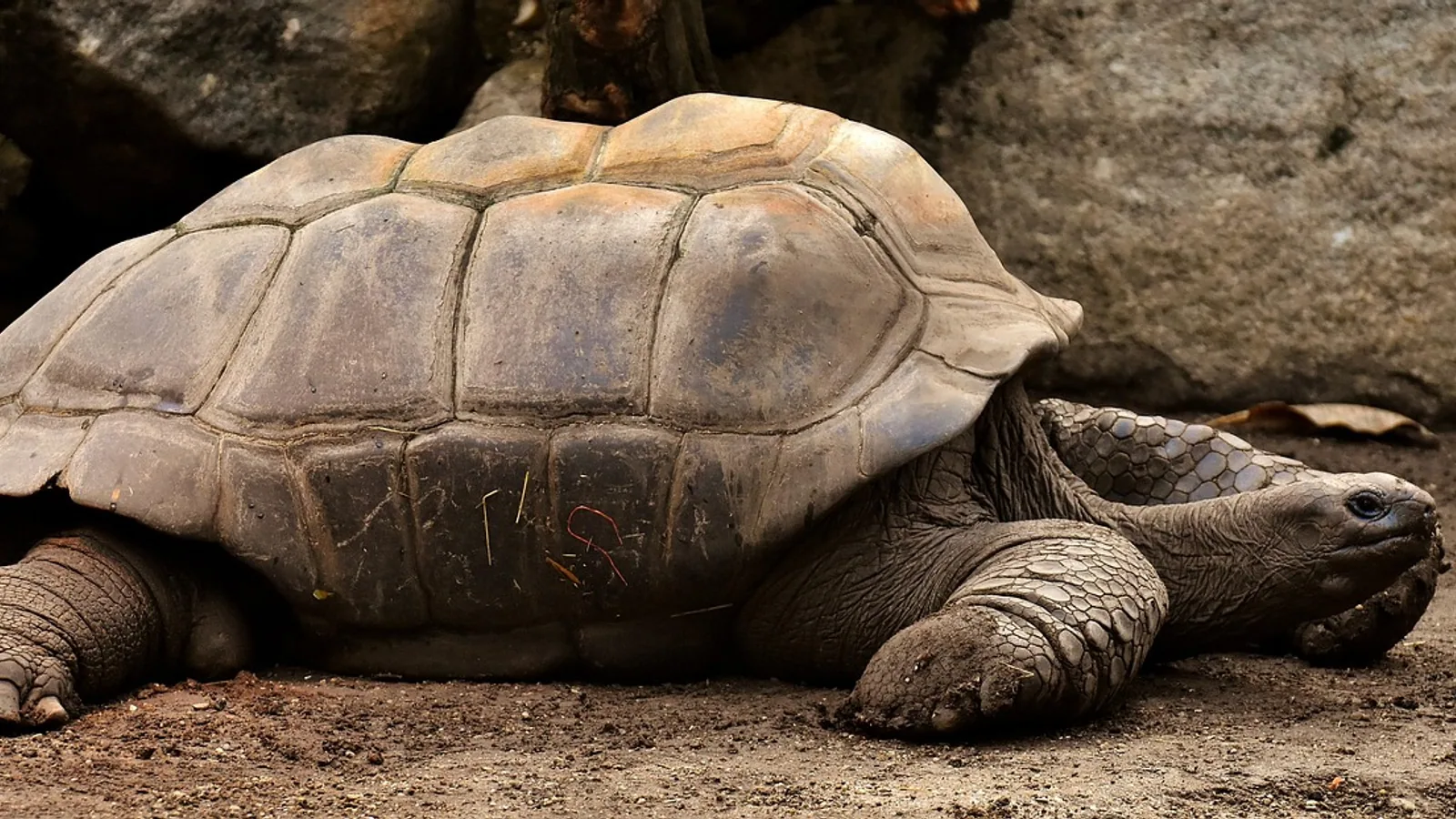
| Galapagos tortoise (Chelonoidis species) | Over 175 years | Long-term capture records and zoo documentation | Moderate |
| Koi (Cyprinus rubrofuscus) | 226 years (Hanako) | Scale growth-ring counting reported in 1966 | Low, disputed |
| Naked mole-rat (Heterocephalus glaber) | Over 30 years | Colony records | High for the age reached, but the species is notable for negligible senescence, not an absolute record |
| Red sea urchin (Mesocentrotus franciscanus) | Over 100 years | Growth models and tagging studies | High |
The pattern is clear. The absolute record belongs to a bivalve, the vertebrate record belongs to a shark, and the mammal record belongs to a whale. Each of those conclusions rests on a different kind of evidence.
Why the Ocean Quahog Holds the Record
Arctica islandica is a thick-shelled clam that burrows into the sediment of the North Atlantic and lives there for centuries. It grows slowly, maturing late and adding a thin band of shell material each year. That annual banding is the foundation of its age record.
Researchers count the growth bands in the hinge region of the shell, a method called sclerochronology. The bands reflect seasonal changes in water temperature and food supply, so each band pair corresponds roughly to one year. Because band counts can be misread, scientists cross-check them against independent clocks. Radiometric dating of the shell material, which incorporates naturally occurring isotopes at known rates, provides an independent estimate. When band counts and radiometric dates agree, the age is considered reliable. The 507-year specimen was confirmed by this combination of methods [1].
The record was not a fluke of one lucky clam. A 2023 comparative study described Arctica islandica as the longest-lived metazoan (a metazoan is any multicellular animal) with a maximum life span of 507 years, and used it as the benchmark for testing ideas about how mitochondria, the energy-producing compartments of cells, relate to aging [2]. That study found that mitochondria from Arctica islandica tissue could consume hydrogen peroxide, a reactive byproduct of metabolism, between 3 and 14 times faster than mitochondria from shorter-lived related species, depending on the respiratory fuel supplied [2]. In plain terms, the clam's cells appear unusually good at neutralizing the chemical damage that accumulates with age.
What the Genome Adds
A high-quality genome assembly published in 2025 gave researchers a molecular reference for the species [1]. The assembly is about 1.78 billion base pairs long, roughly 60 percent the size of the human genome. It contains 39,509 predicted genes, and more than 98 percent of them could be matched to known gene databases. The genome shows a repeat content of 67.66 percent, meaning a large fraction of the sequence consists of repeated elements, and a heterozygosity rate of 1.15 percent, a measure of how much genetic variation exists between the two copies of each chromosome.
That genome matters because it lets scientists compare long-lived and short-lived bivalves directly. The goal is to find which molecular pathways are shared across species that evolved extreme longevity independently.
The Greenland Shark: The Longest-Lived Vertebrate
A vertebrate is any animal with a backbone, and among vertebrates the Greenland shark holds the record. These sharks live in the cold, deep waters of the North Atlantic and Arctic, grow slowly, and reach lengths over 5 meters.
The 2016 study that established the record used a clever method. The nucleus of the eye lens is made of proteins laid down before birth and never replaced. Those proteins contain carbon atoms, and the ratio of carbon-14 isotopes in them reflects the level in the environment when the tissue formed. Atmospheric carbon-14 spiked sharply in the early 1960s because of above-ground nuclear weapons testing, creating a marker that lets researchers tell whether an animal was born before or after that pulse. Radiocarbon dating of lens nuclei from 28 female Greenland sharks, ranging from 81 to 502 centimeters in total length, produced a life span estimate of at least 272 years. Only the smallest sharks, those 220 centimeters or less, showed the bomb-pulse signal, so the rest were born before the 1960s. The largest shark, at 502 centimeters, was estimated at 392 ± 120 years old [3].
That plus-or-minus 120 is the honesty of the method. The central estimate is around four centuries, but the range is wide. The authors concluded the Greenland shark is the longest-lived vertebrate known [3]. Genomic work published later describes an estimated life span of 392 ± 120 years and confirms the species as a candidate for the vertebrate record [4]. Other reviews put the figure at more than 400 years [5]. The upper end of the confidence range extends past 500 years, but no single Greenland shark has been directly confirmed at that age.
Why the Shark Lives So Long
The Greenland shark's biology is built for slowness. It has a low metabolic rate, matures late (sexual maturity was estimated at a minimum of 156 ± 22 years in the 2016 study), and lives in near-freezing water that suppresses the pace of physiological processes [5][3].
Recent genomic work adds detail. The Greenland shark genome is about 5.9 billion base pairs, larger than the human genome, and contains expanded families of genes involved in immune function, cancer resistance, and DNA repair [4]. Those expansions are exactly the categories you would expect in a long-lived animal. The genome also carries unusual amino acid substitutions in a protein called linker histone H1.0, which is predicted to make chromatin (the packaged form of DNA) more stable, and the authors raise the possibility that resistance to a type of iron-dependent cell death called ferroptosis contributes to the animal's longevity [4].
A 2026 study of the shark's heart found a striking contradiction. The heart muscle showed extensive fibrosis (scarring), heavy accumulation of lipofuscin (a pigment that builds up in aging cells), and markers of oxidative stress, all classic signs of an aging heart. Yet the animals were captured in healthy condition and appeared physiologically uncompromised [6]. The authors interpret this as resilience, meaning the shark accumulates the damage of aging without suffering its functional consequences, at least up to the ages examined.
The shark's visual system tells a similar story. Despite living in dim Arctic water and often carrying parasitic copepods on the cornea, the examined specimens, some over a century old, showed no obvious retinal degeneration. Genes for dim-light vision remained intact and active, while many bright-light vision genes had been lost [7].
Bowhead Whales: The Mammal Record
The bowhead whale is the longest-lived mammal. These baleen whales live only in Arctic and sub-Arctic waters and can exceed 200 years.
Three independent methods support this. Earplugs are waxy plugs that form in the ear canal and accumulate layers over time, similar to tree rings. Aspartic acid racemization measures how a particular amino acid in the eye lens converts from one mirror-image form to another at a predictable rate over decades. DNA methylation clocks use chemical tags on DNA that change with age and can be calibrated against known-age individuals. A 2023 study built and validated four epigenetic clocks (age-estimation tools based on DNA methylation) for skill and bowhead whale skin samples, achieving median errors of 2.3 to 3.7 years [8]. An error of a few years is extraordinary precision for an animal that may live two centuries, and it makes the bowhead one of the best-dated long-lived species.
Some bowhead whales carry stone harpoon points embedded in their blubber, artifacts from nineteenth-century whaling that had fallen out of use, which corroborates the extreme ages. That kind of physical evidence is memorable but not a dating method in itself. The scientific case rests on the earplug, racemization, and methylation data.
Galapagos Tortoises: Reliable but Shorter
Galapagos tortoises routinely exceed 175 years in captivity, and the figure is well documented through zoo records and long-running individual histories. The giant tortoises are also the best-studied example of slow senescence in reptiles.
A large comparative study of turtles and tortoises in zoos and aquariums found that about 75 percent of 52 species showed slow or negligible senescence, meaning their risk of death did not climb steeply with age. For about 80 percent of species, aging rates were lower than those of modern humans [9]. The same study found that body weight was positively related to adult life expectancy in both sexes, and that unlike humans, turtles and tortoises can reduce their rate of senescence when environmental conditions improve [9].
That last finding is unusual. In most animals studied, aging is not responsive to the environment in this way. It suggests that reptile longevity is less a fixed clock and more a function of how well the animal's surroundings support its physiology.
Koi Hanako: Why the 226-Year Record Is Disputed
The koi named Hanako is the source of the famous claim that a fish lived 226 years. Her age was reportedly estimated by counting growth rings on her scales in 1966. That method, called scale ring counting, is used in some fisheries work, but its accuracy depends on assumptions about growth patterns that are hard to verify in a hand-fed ornamental fish. There was no independent radiometric check, no DNA-based clock, and no archive of the original specimens or records that would let other scientists reexamine the claim.
The claim has been repeated widely in aquarium and ornamental-fish marketing, which is one reason it persists. Readers should treat the 226-year figure as unverified. A koi living several decades is impressive and well within the documented range. The specific Hanako number does not meet the evidence standard applied to the quahog, shark, bowhead, or tortoise.
Verified Records Versus Estimates
The central distinction in this field is between direct measurement and statistical inference.
A verified record comes from an individual animal whose age was established by at least one method with a known, quantified error, ideally confirmed by a second independent method. The 507-year quahog is verified by band counting cross-checked against radiometric dating [1]. The bowhead ages are verified by multiple clocks, including DNA methylation with stated error margins [8].
An estimate is a statistical statement about a population. The Greenland shark's 392 ± 120 years is an estimate. It is a strong one, based on 28 animals and a well-understood dating method, but it is still a range rather than a single confirmed age [3]. Anyone who tells you a specific Greenland shark was "512 years old" is reporting the top of a confidence interval as if it were a measurement.
A claim is unsupported when it rests on a single method with no error estimate, no independent confirmation, and no accessible evidence. The Hanako figure falls in this category.
Negligible Senescence: A Different Kind of Record
Some animals are interesting not because they live the longest but because they barely age at all. Negligible senescence describes a pattern in which an animal's risk of dying does not increase meaningfully as it gets older. The concept is distinct from maximum life span. A species can be long-lived with normal aging, or short-lived with negligible senescence, though the two often travel together.
Naked Mole-Rats
Naked mole-rats are the classic mammal example. They live far longer than similar-sized rodents, resist many age-related diseases, and show negligible senescence [10]. Research points to several mechanisms. One study found that naked mole-rat tissues express splicing factors, proteins that control how genetic messages are cut and assembled, at roughly double the levels seen in similarly sized mice, and that these levels and the resulting splicing patterns remain stable in the brain across most of the animal's long life [11]. Maintaining accurate splicing may prevent the accumulation of faulty proteins that drives aging in other species.
Rockfish, Ocean Quahogs, and Greenland Sharks
A 2019 review grouped several species as exhibiting negligible senescence and exceptional resistance to age-related disease, including naked mole-rats, the ocean quahog, rockfish, and the Greenland shark. The common thread the authors identified is superior stress resistance, linked to maintained protein homeostasis (the cell's ability to keep its proteins correctly folded and functional) and robust mitochondrial function [10]. Treatments that target protein modification and boost antioxidant capacity are proposed as possible routes to extending human health span, though that remains a research direction rather than an established therapy.
Red Sea Urchins
Red sea urchins live more than 100 years with indeterminate growth (they keep growing throughout life), reproduce continuously, and show no increase in mortality rate with age [12][13]. Their genome shows expanded gene families involved in innate immunity, sensory nervous systems, and genome stability, and a network of genes under positive selection related to genetic regulation, mRNA fidelity, protein homeostasis, and mitochondrial function [12]. A separate transcriptional study found that the radial nerve showed the most age-related change of any tissue examined, with 3,370 genes significantly altered more than twofold with age, including upregulation of genes for synaptogenesis, axonogenesis, neuroprotection, and components of the AMPK, autophagy, proteasome, and unfolded protein response pathways [14]. In other words, the aging sea urchin nerve appears to be actively maintaining itself rather than degenerating.
Sea urchins also do not show age-associated telomere shortening and maintain telomerase activity in somatic tissues regardless of age [13]. Telomeres are protective caps on the ends of chromosomes that usually shorten with each cell division, and telomerase is the enzyme that rebuilds them. Keeping telomeres intact in body tissues is one route to avoiding the cellular clock that limits the life span of most animal cells.
Bats
Some bat species live 20 to 40 years, far longer than their body size would predict. Bat fibroblasts do not undergo replicative senescence, express active telomerase, and show a dampened inflammatory secretory phenotype, all consistent with slow aging. Unlike some other long-lived mammals, bat cells are readily transformed by cancer-causing genes in the laboratory, which suggests that in the living animal, bats may rely on enhanced immune surveillance rather than cell-intrinsic tumor suppression [15]. That is a useful caution against assuming that a single mechanism explains longevity across species.
What the Biology Has in Common
Across the species studied, a few themes recur. Long-lived animals tend to have efficient DNA repair, strong protein quality control, low metabolic rates or low cumulative oxidative damage, and immune systems that stay functional. A comparative transcriptomic study of 103 mammal species found that pathways related to translation fidelity, the accuracy with which proteins are built, correlated with longevity across all three organs examined (liver, kidney, and brain), and that expression of methionine restriction-related genes correlated with longevity and was under strong selection in long-lived mammals [16]. Translation fidelity and methionine restriction are both about slowing the rate at which errors accumulate in proteins.
This is a theme more than a formula. Different species achieve longevity through different combinations of mechanisms, and the sea urchin, the clam, the shark, and the mole-rat did not inherit a single shared anti-aging toolkit. They converged on the outcome from different molecular starting points [1][4][12].
Common Mistakes and Limitations
The biggest mistake readers make is treating a headline number as a measured age. The Greenland shark figure is not a single animal's confirmed age. It is a statistical estimate with a wide interval [3]. Reporting the top of that interval as fact is a common error in popular coverage.
A second mistake is assuming the longest-lived animal is the most impressive or most useful. The ocean quahog's record is remarkable, but the species is a slow-growing, cold-water clam with limited relevance to how a human or a pet ages. The bowhead whale's multi-method verification is arguably the stronger scientific achievement even though its maximum age is lower, because three independent clocks agree [8].
A third mistake is confusing longevity with negligible senescence. An animal can live a very long time and still age normally. An animal can avoid aging but not live especially long. The naked mole-rat is famous for negligible senescence [10][11], while the quahog is famous for the absolute record [1]. They are different claims.
A fourth mistake is trusting ornamental-fish or pet-marketing claims about ages. Documented ages in managed animals require records that other people can examine. Claims that cannot be checked should be labeled as such.
A fifth mistake is assuming that a long-lived species must be immune to aging. The Greenland shark heart shows fibrosis, lipofuscin accumulation, and oxidative stress markers, all classic aging changes, even though the animals functioned normally when examined [6]. Longevity can mean tolerating damage, not avoiding it.
Finally, no article can tell you how long a specific individual animal will live. Age estimates in this field are population-level, and any individual case needs direct examination by a qualified professional.
Practical Implications for Owners and Keepers
If you keep a long-lived species, plan for decades. Tortoises, certain parrots, koi, and large fish can outlive their owners. The Galapagos tortoise record exceeds 175 years, and the turtle and tortoise study showed that about 75 percent of species age slowly [9]. That means the care environment over many decades directly affects how long the animal lives, and improvements in conditions can measurably slow senescence [9].
For koi keepers, treat age claims with skepticism and focus on water quality, diet, and space. A koi reaching several decades is a realistic and admirable outcome. The 226-year figure is not a target and not a benchmark.
For anyone interested in comparative biology, the practical lesson is that longevity is not one trait. It is an outcome of many interacting systems, and the species that achieve it did so in different ways. That diversity is what makes the field worth studying.
Frequently Asked Questions
What animal lives the longest?
The ocean quahog Arctica islandica holds the verified record at 507 years, confirmed by growth-band counting cross-checked with radiometric dating [1].
What is the longest-lived vertebrate?
The Greenland shark is considered the longest-lived vertebrate, with an estimated life span of at least 272 years and a central estimate of 392 ± 120 years for the largest measured specimen [3].
How do scientists determine the age of a Greenland shark?
They radiocarbon-date the proteins in the eye lens nucleus, which form before birth and are never replaced. The carbon-14 bomb pulse from early 1960s nuclear testing provides a time marker [3].
How long do bowhead whales live?
Bowhead whales can live over 200 years, verified by earplug layering, aspartic acid racemization, and DNA methylation clocks with median errors of 2.3 to 3.7 years [8].
Is the koi Hanako's 226-year age real?
No. The claim rests on a single scale-ring count from 1966 with no independent verification, so it does not meet the standards applied to other records.
What is negligible senescence?
Negligible senescence is a pattern in which an animal's risk of dying does not increase meaningfully with age. Naked mole-rats, some rockfish, and ocean quahogs are examples [10].
Do any animals stop aging entirely?
No animal is known to stop aging completely. Some species show negligible senescence, meaning the increase in mortality with age is very slow, but they are not immortal [10][9].
Why do some animals live so much longer than others?
Long-lived species tend to have efficient DNA repair, strong protein quality control, and maintained mitochondrial and immune function. A comparative study of 103 mammal species found that translation fidelity pathways correlated with longevity across organs [16].
Related Articles
- Snake Lifespan and Growth: What to Expect as a Pet Owner
- Laboratory Animal Monitoring: Clinical Observations, Record Keeping, and Intervention Criteria
- IATA Airline-Approved Live Animal Cargo Crates: Ventilation Requirements, Door Bolts, and Dimension Ratios
- How Long Do Labs Live
- How Long Do Dogs Live
- How Long Do Dogs Live For
Sources
- Genome Assembly of Arctica islandica, the Longest-Lived Non-Colonial Animal Species.
- The longest-lived metazoan, Arctica islandica, exhibits high mitochondrial H(2)O(2) removal capacities.
- Eye lens radiocarbon reveals centuries of longevity in the Greenland shark (Somniosus microcephalus).
- The Greenland shark genome: Insights into lifespan extremes and population dynamics.
- Potential factors contributing to extreme longevity in the Greenland shark.
- Resilience to Cardiac Aging in Greenland Shark Somniosus microcephalus.
- The visual system of the longest-living vertebrate, the Greenland shark.
- DNA methylation-based biomarkers for ageing long-lived cetaceans.
- Slow and negligible senescence among testudines challenges evolutionary theories of senescence.
- Long-lived animals with negligible senescence: clues for ageing research.
- Negligible senescence in naked mole rats may be a consequence of well-maintained splicing regulation.
- Genomic signatures of exceptional longevity and negligible aging in the long-lived red sea urchin.
- Senescence and Longevity of Sea Urchins.
- Unique age-related transcriptional signature in the nervous system of the long-lived red sea urchin Mesocentrotus franciscanus.
- Limited cell-autonomous anticancer mechanisms in long-lived bats.
- Large-scale across species transcriptomic analysis identifies genetic selection signatures associated with longevity in mammals.