
Shotgun Metagenomics vs 16S rRNA Sequencing: Which Method Fits the Question?
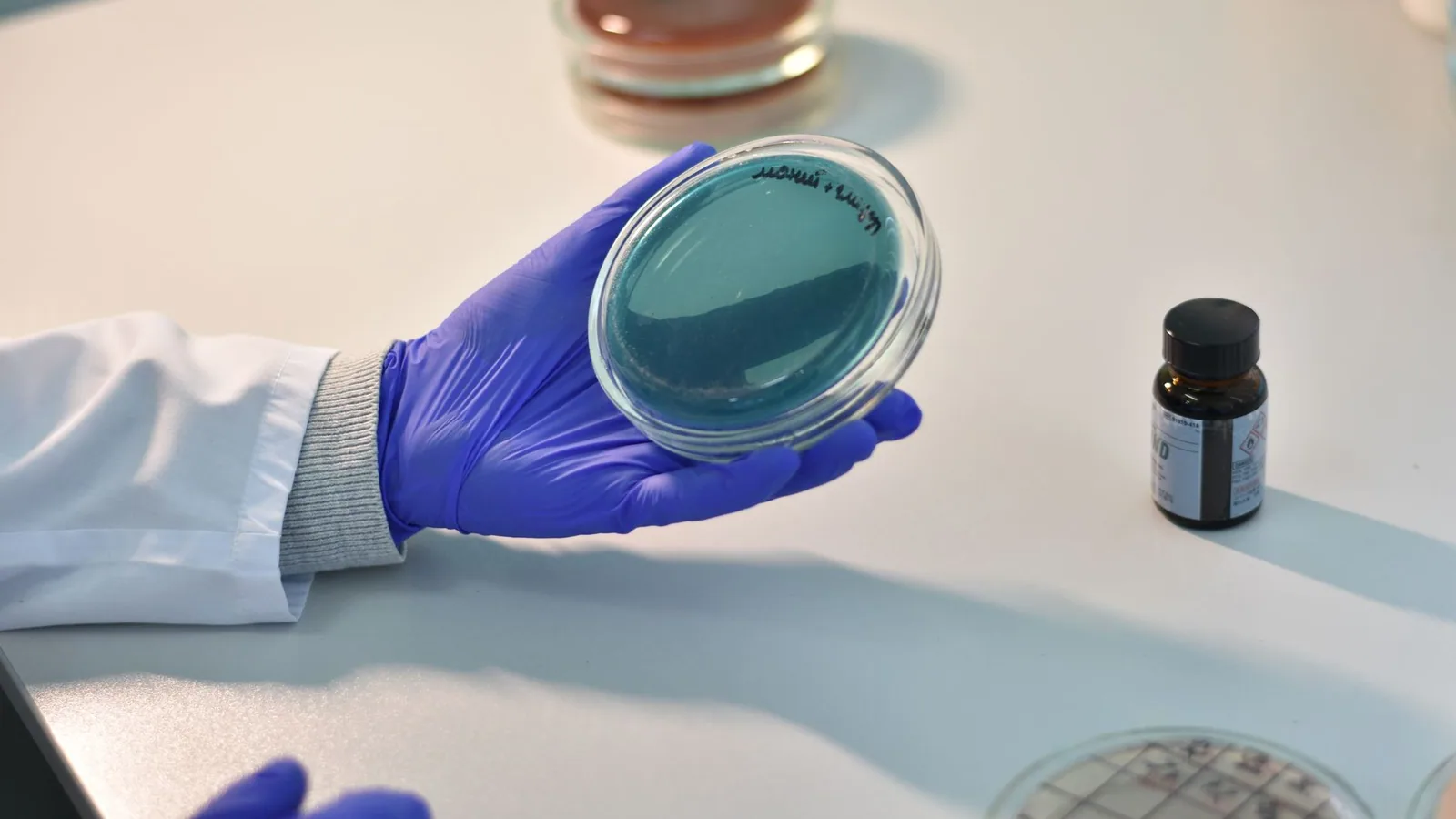
If you need to profile a microbial community, shotgun metagenomic sequencing and 16S rRNA amplicon sequencing are the two dominant approaches. Shotgun metagenomics sequences all DNA in a sample, providing both taxonomic composition and functional potential at high resolution. 16S rRNA sequencing targets a single gene, giving only taxonomic profiles at lower resolution but at lower cost and with simpler analysis. This guide is for research scientists, graduate students, and clinical investigators who must choose a sequencing method that matches a defensible study question. We will compare taxonomic resolution, functional inference, cost, controls, sample complexity, analysis pathways, and interpretation limits so you can make an informed decision. For authoritative background on sequencing methods, consult NCBI Bookshelf. Practical bioinformatics workflows are available from the Galaxy Training Network.
At a Glance
| Feature | 16S rRNA Sequencing | Shotgun Metagenomic Sequencing |
|---|---|---|
| Target | Single hypervariable region(s) of the 16S rRNA gene | All microbial DNA (bacteria, archaea, fungi, viruses, host) |
| Taxonomic resolution | Genus level typically, species possible with full-length or specific regions | Strain level possible |
| Functional inference | Indirect (predictive tools like PICRUSt) | Direct (gene annotation, pathway reconstruction) |
| Cost per sample (USD) | $30,70 (library prep + sequencing) | $100,300+ (higher sequencing depth) |
| DNA input required | Low (1,10 ng) | Moderate (50,500 ng) |
| Host DNA contamination | Avoided by design (primer specificity) | Requires computational removal or depletion |
| Analysis complexity | Moderate (OTU/ASV pipelines) | High (assembly, annotation, binning) |
| Controls essential | Negative extraction controls, positive mock communities | Same plus spike-in controls for quantitation |
| Best for | Large cohort studies, low biomass, targeted bacterial surveys | Mechanistic studies, novel organisms, functional potential |
Decision Criteria
Taxonomic Resolution
If your question requires species or strain level identification, shotgun metagenomics is the clear choice. The 16S rRNA gene is highly conserved and its hypervariable regions (e.g., V3-V4, V4) often cannot discriminate closely related species. A study comparing V3-V4 and V4 regions in obese children with fatty liver disease found that the choice of region affected community composition, and neither region resolved all taxa at species level (PubMed: 42032992). In contrast, shotgun metagenomics recovers whole genomes from metagenome assembled genomes (MAGs) and can differentiate strains. For example, in a crayfish rice coculture model, shotgun data revealed stability of soil microbial community composition and function at the strain level (PubMed: 42045553). Use 16S when genus level is sufficient, use shotgun for strain level or when you need to detect rare taxa.
Functional Inference
16S rRNA data can only infer functional potential through tools like PICRUSt or Tax4Fun, which rely on reference databases of sequenced genomes. This inference is indirect and can miss novel functions or those from uncultured lineages. Shotgun metagenomics directly sequences functional genes, allowing reconstruction of pathways, identification of antibiotic resistance genes, and detection of metabolic potential. A study of gut virome characteristics in IgA nephropathy used shotgun metagenomics to characterize both bacterial and viral gene content (PubMed: 42205184). If your hypothesis involves specific enzymes or pathways, choose shotgun. If you only need broad functional categories, 16S with predictive tools may be acceptable but with noted uncertainty.
Cost and Throughput
16S sequencing is cheaper per sample and allows scaling to hundreds or thousands of samples within a budget. It is ideal for large cohort studies, such as clinical trials or epidemiological surveys. Shotgun metagenomics costs more because it requires higher sequencing depth (usually 5,10 million reads per sample versus 100,000 for 16S) and more expensive library preparation. However, the cost gap has narrowed with newer sequencing platforms. For cost sensitive projects where genus level taxonomy is adequate, 16S is pragmatic. For smaller mechanistic studies where function is critical, shotgun is justified.
Sample Complexity and DNA Quality
Low biomass samples (e.g., skin swabs, meconium) are challenging for shotgun metagenomics because host DNA can dominate. 16S PCR selectively amplifies bacterial DNA, bypassing host contamination. In a study of first pass meconium microbiota in neonates with intestinal atresia, 16S sequencing was used because of low bacterial biomass and high host DNA background (PubMed: 42442462). Shotgun metagenomics can work with low biomass but requires deeper sequencing and computational host read removal. Methods to evaluate viable versus nonviable microbiota (e.g., using propidium monoazide) have been combined with 16S in hair follicle microbiome studies (PubMed: 42149452). For samples with high microbial load and low host content, shotgun is feasible. For very low biomass or samples with high host DNA, 16S is more reliable.
Controls and Quantitation
Both methods require negative extraction controls and positive controls (mock communities). Shotgun metagenomics also benefits from spike in controls (e.g., synthetic DNA) for absolute quantitation of microbial load. 16S data are inherently compositional, relative abundances can be compared but not absolute counts. A study on oral dysbiosis index in oral squamous cell carcinoma used 16S to derive a bacteriome based index, noting that compositional data limited longitudinal comparisons (PubMed: 42125669). If absolute quantitation is needed, consider shotgun with spike ins or quantitative PCR along with 16S.
Practical Workflow or Implementation Sequence
- Define the biological question. Ask: Do I need strain level taxonomy? Do I need functional genes? Is my sample low biomass? Answering these will steer method choice.
- Select sequencing strategy. For genus level bacterial surveys with many samples: 16S (V3-V4 or V4 region). For functional potential or novel organisms: shotgun metagenomics. For virome or fungi: shotgun is required (16S only targets bacteria and archaea).
- Collect samples with appropriate controls. Include extraction blanks, mock communities, and for shotgun, a spike in control if absolute abundance is desired.
- Extract DNA. Use a method that preserves DNA from diverse taxa. For low biomass, minimize contamination.
- Library preparation. 16S: PCR amplify target region with barcoded primers. Shotgun: fragment DNA, end repair, adapter ligation. Both require indexing for multiplexing.
- Sequencing. 16S: typically Illumina MiSeq (2x250 or 2x300). Shotgun: Illumina NovaSeq (2x150) for depth. For longer reads, consider long read platforms (see related article Long-Read vs Short-Read Sequencing).
- Bioinformatics analysis. For 16S, use DADA2 (Bioconductor package) or QIIME 2 to generate amplicon sequence variants (ASVs). For shotgun, use pipelines like MetaPhlAn for taxonomy and HUMAnN for function, or do de novo assembly with MAGs. Training resources from EMBL-EBI Training and the Galaxy Training Network cover both approaches.
- Statistical analysis. Account for compositional data. For 16S, use ALDEx2 or ANCOM. For shotgun, similar tools exist, and functional data can be analyzed via pathway level differential abundance.
- Interpretation. Recognize limits: 16S does not capture novel taxa beyond primer bias. Shotgun may miss low abundance taxa if sequencing depth is insufficient.
Common Mistakes
- Using 16S when strain level resolution is needed. You will miss clinically relevant strain variations. A study comparing V3-V4 and V4 regions demonstrated that different hypervariable regions can lead to different taxonomic assignments (PubMed: 42032992).
- Omitting proper controls. Without extraction blanks, contamination from reagents can be mistaken for true signal, especially in low biomass samples. Mock communities help validate pipeline accuracy.
- Assuming 16S data represent absolute abundance. The compositional nature means a decrease in one taxon forces increases in others. Do not interpret relative abundances as absolute counts.
- Insufficient sequencing depth for shotgun. For functional annotation, you need coverage of the whole community. Shallow shotgun (e.g., <1 million reads) may give taxonomic profiles but miss rare functions. Check guidelines from NCBI Sequence Read Archive for recommended depths based on community complexity.
- Ignoring host DNA. In shotgun data from human tissue or stool, host reads can be up to 90%. Plan for computational removal or use a host depletion kit. 16S avoids this issue entirely.
- Choosing the wrong hypervariable region. Different regions have different taxonomic coverage. The V3-V4 and V4 regions are most common for bacteria, but each has biases. Validate against known community composition if possible.
Limits and Uncertainty
Both methods have fundamental limitations. 16S sequencing cannot detect viruses, fungi, or archaea (though specialized primers exist for archaea). It also suffers from primer bias: universal primers do not bind equally to all bacterial taxa, leading to underrepresentation of certain phyla (e.g., Verrucomicrobia, Planctomycetes). Newer primer sets improve coverage but are not perfect. The use of ASVs instead of OTUs has increased resolution but still cannot resolve strains. Predictive functional tools have low accuracy for communities with many unknown lineages.
Shotgun metagenomics can theoretically detect all organisms, but in practice, low abundance taxa may be missed due to sequencing depth limits. De novo assembly is computationally intensive and can produce fragmented genomes from complex communities. Strain level resolution requires deep sequencing and sophisticated binning algorithms. Host DNA contamination is a major challenge, even after computational removal, some reads may map incorrectly. Furthermore, functional annotation relies on reference databases, many genes from uncultured organisms remain unannotated. A recent study on soil microbial communities using crayfish rice coculture showed that shotgun data could maintain functional stability metrics, but rare functions were still difficult to characterize (PubMed: 42045553).
Uncertainty also arises from methodological choices: DNA extraction methods differentially lyse cells (Gram positive vs Gram negative), PCR cycles introduce bias (for 16S), and bioinformatics parameters affect results. For rigorous comparisons, standard operating procedures should be used across all samples. The Bioconductor project provides extensive documentation on statistical methods that account for these uncertainties.
Given these limits, the best approach is to align the method with the question. For exploratory studies where taxonomy and broad function are not the primary endpoint, 16S is efficient. For hypothesis driven work requiring functional or strain level insight, shotgun metagenomics is more defensible. In some cases, using both methods on the same samples can provide complementary data, though budget permitting.
Frequently Asked Questions
Q: Can I detect viruses with 16S rRNA sequencing? A: No. 16S rRNA primers are specific to bacteria and archaea. To detect viruses, you must use shotgun metagenomics or targeted enrichment. For example, a study on gut virome in IgA nephropathy used shotgun metagenomics to characterize viral populations (PubMed: 42205184).
Q: How do I choose between V3-V4 and V4 regions for 16S sequencing? A: Both are widely used. V3-V4 gives slightly higher taxonomic resolution for some groups, while V4 is shorter and less prone to sequencing errors. A direct comparison in obese children found that V3-V4 and V4 produced different profiles, so you should pick one region and stay consistent across a study (PubMed: 42032992). Consult the Earth Microbiome Project recommendations for guidance.
Q: Can I use 16S data to infer antibiotic resistance genes? A: Only indirectly via predictive tools like PICRUSt. These tools rely on known genomes and may miss novel resistance genes. Shotgun metagenomics directly detects resistance gene sequences and is preferred for this purpose.
Q: What is the minimum sequencing depth for shotgun metagenomics? A: For taxonomic profiling, 5 million reads per sample is a common minimum. For functional profiling or recovery of MAGs, 10,20 million reads or more may be needed, depending on community complexity. Low complexity communities (e.g., stool) require less depth, soil or marine samples require more. Check published guidelines at NCBI SRA for similar studies.
References and Further Reading
- NCBI Bookshelf provides in depth chapters on sequencing technologies and metagenomics.
- EMBL-EBI Training offers free courses on 16S and shotgun analysis.
- Galaxy Training Network includes hands on tutorials for microbiome workflows.
- Bioconductor provides R packages like DADA2, phyloseq, and metagenomeSeq for analysis.
- NCBI Sequence Read Archive stores raw sequencing data and metadata for reference.
- Characteristics and environmental susceptibility of first-pass meconium microbiota in neonates with congenital intestinal atresia. J Pediatr Surg 2025. PubMed: 42442462
- Gut Virome Characteristics and Network Alterations in IgA Nephropathy. Kidney Int Rep 2024. PubMed: 42205184
- Viable vs. Nonviable Microbiota Evaluation of the Hair Follicle and Scalp Microbiome. Methods Mol Biol 2024. PubMed: 42149452
- Bacteriome-based oral dysbiosis index in patients with oral squamous cell carcinoma. J Oral Microbiol 2024. PubMed: 42125669
- The crayfish-rice coculture model contributes to regulating the soil fertility of rice fields and maintaining the stability of soil microbial community composition and function. Adv Biotechnol (Singap) 2025. PubMed: 42045553
- Comparison of 16S rRNA gene hypervariable regions V3-V4 and V4 sequencing results of gut microbiota in obese children with non-alcoholic fatty liver disease. Zhong Nan Da Xue Xue Bao Yi Xue Ban 2025. PubMed: 42032992
Related Articles
- Protein Synthesis: A Step-by-Step Guide to Transcription and Translation
- Protein Structure Levels: How Primary, Secondary, Tertiary, and Quaternary Structure Shape Function
- Long-Read vs Short-Read Sequencing: Choosing a Platform and Analysis Strategy
- Protein Synthesis: A Step-by-Step Guide to Transcription and Translation
- Protein Structure Levels: How Primary, Secondary, Tertiary, and Quaternary Structure Shape Function