Secondary Succession: Definition, Stages, and Examples
By Dr. Zubair Khalid, DVM, MS, PhD ·
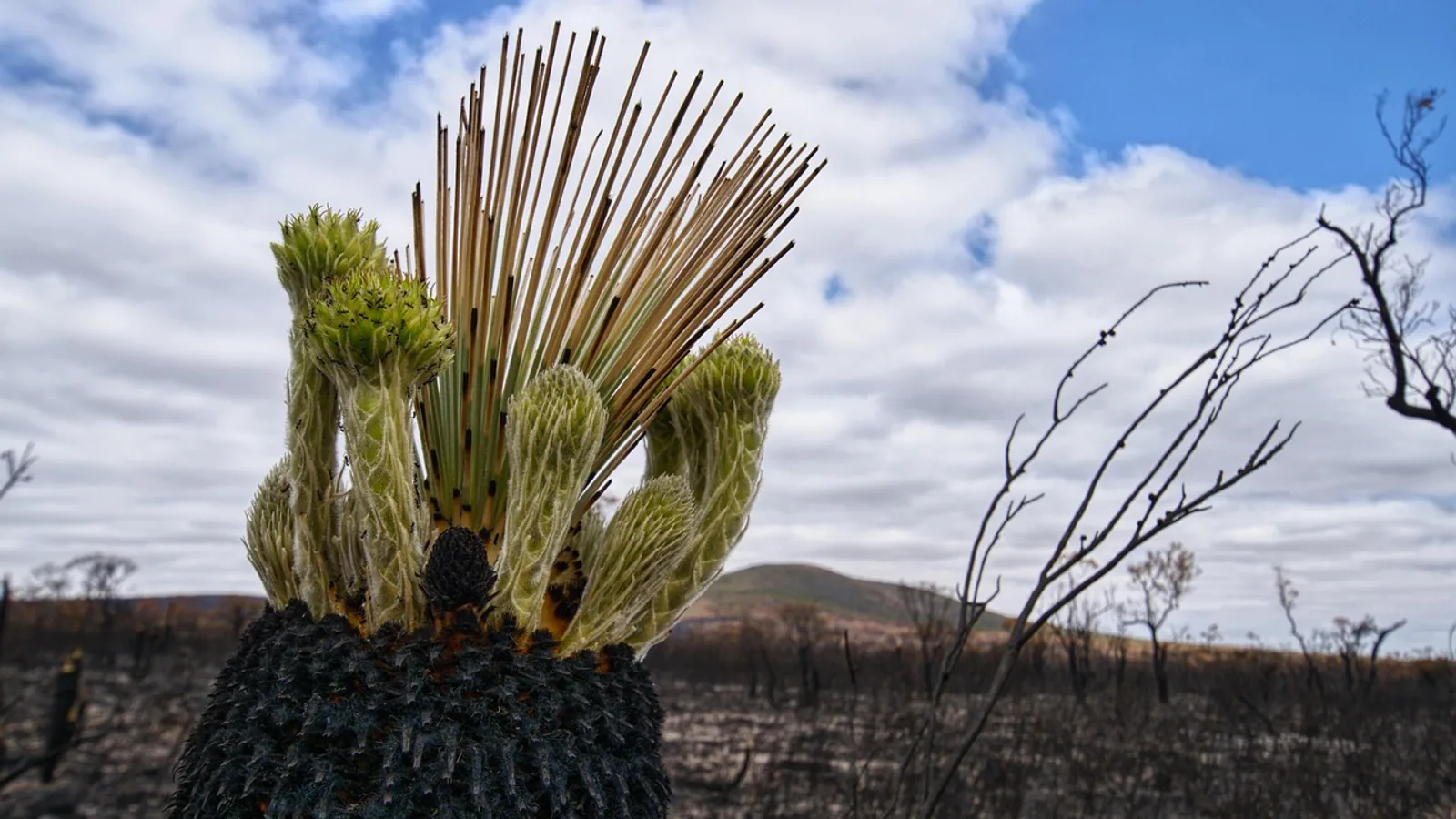
Secondary succession is the process by which an ecosystem rebuilds itself after a disturbance, such as a fire, a flood, a landslide, or the abandonment of farmland, in a place where soil already exists. It differs from primary succession because the starting point is not bare rock or new sand but an intact or partly intact soil profile that already holds nutrients, seeds, roots, and microbes.
That single distinction, soil present versus soil absent, controls almost everything about how fast recovery happens, which species arrive first, and how predictable the outcome is. Secondary succession matters because most of the disturbed land on Earth is recovering this way right now. Abandoned fields, logged forests, burned hillsides, and storm-damaged coastlines all follow this path. Understanding it helps students read landscapes, helps restoration ecologists plan interventions, and helps anyone interpret why a weedy field turns into a thicket and eventually into forest.
What Secondary Ecological Succession Actually Means
Ecological succession is the directional change in species composition and ecosystem structure at a site over time. Ecologists split it into two broad types based on the starting conditions. Primary succession begins on a surface that has never supported a community, such as lava flows, retreating glaciers, or newly exposed sand dunes. Secondary succession begins where a community existed before and was removed or damaged, but the soil survived.
The word "secondary" refers to the fact that the site has already been through a first round of soil formation. Soil is the slowest resource to build. It accumulates over centuries through weathering, organic matter deposition, and the activity of plants and microbes. When a disturbance removes vegetation but leaves that soil behind, the ecosystem skips the slowest step and restarts from a much richer baseline.
Soil in a secondary succession site is not just dirt. It is a living reservoir. It contains a seed bank, which is the pool of viable seeds buried in the soil and waiting for light, temperature, or moisture conditions that trigger germination [1]. It contains fungal networks, bacteria, nematodes, and other organisms that recycle nutrients. It contains stored organic carbon and mineral nutrients that the previous community left behind. All of these legacies give secondary succession a head start that primary succession never gets.
The concept also has a mechanistic angle. Recent work frames succession through three components: start, speed, and direction [2]. Start describes when and how recovery begins, which depends heavily on biological legacies such as surviving roots, seeds, and woody stumps. Speed describes how quickly species accumulate and structure develops. Direction describes where the trajectory leads. In a study of the first five years of forest regrowth on abandoned tropical farmland, succession typically started with woody legacies and progressed slowly but directionally toward structurally complex, biodiverse forest [2]. Sites with short-duration, low-intensity land use, meaning non-mechanized farming that left more biological legacies behind, started faster and recovered faster [2].
Why Soil Changes Everything
The presence of soil drives three practical differences between secondary and primary succession.
First, colonization is faster. Seeds already in the soil can germinate within weeks of a disturbance. Roots and rhizomes of perennial plants can resprout from surviving fragments. In primary succession, the first colonizers must arrive from outside the site, often by wind or animal dispersal, and they must tolerate a harsh, nutrient-poor substrate.
Second, nutrient cycling restarts quickly. Soil microbes, including bacteria and fungi, remain active or recover rapidly. Soil viruses also shift in abundance and composition as forest stands age, and their functional profiles transition from carbon assimilation toward carbon release pathways over the course of succession [3]. This microbial activity means nutrients are not locked away for decades.
Third, the trajectory is more constrained by local conditions. Because soil properties, seed banks, and remnant vegetation vary from site to site, secondary succession can follow many different paths. A study across six tropical landscapes found that landscape identity explained a large share of variation in successional trajectories, with country-level social factors mattering more than forest type during early succession [4]. In other words, the same climate and soil type can produce different recovery patterns depending on how the land was used before abandonment.
The Stages of Secondary Succession
Secondary succession is usually described in stages, though real ecosystems blend them together. The stages below are a teaching framework, not a rigid script.
Stage 1: Pioneer Species and Early Colonization
Pioneer species are the first organisms to establish after a disturbance. In secondary succession, these are typically fast-growing, short-lived plants that tolerate full sun, disturbed soil, and low competition. Common pioneers include grasses, weeds, and herbaceous annuals. Many of them grow from seeds already in the soil seed bank, which is why a plowed field can turn green within weeks of abandonment [1].
Pioneer species share traits. They disperse well, germinate quickly, grow fast, and produce abundant seeds. They also modify the site. Their roots stabilize soil, their litter adds organic matter, and their shade begins to change the light environment for later arrivals.
In some systems, pioneer trees rather than herbs dominate early. A study of secondary succession in a Himalayan forest found that a nitrogen-fixing early colonizer, Alnus nepalensis (alder), drove changes in soil bacterial communities as it grew [5]. Bacterial diversity increased with alder development, and the dominant bacterial group shifted from actinobacteria to proteobacteria as the stand aged [5]. The alder also increased trace mineral concentrations in the soil, which explained a large share of the variation in bacterial diversity [5].
Stage 2: Intermediate Shrubs and Young Trees
As pioneers modify the soil and light environment, shrubs and fast-growing trees establish. This intermediate stage is often the most structurally complex phase of early succession. Woody plants create vertical structure, provide perches and nesting sites for birds, and cast enough shade to suppress the sun-loving pioneers that came before them.
This stage is also when soil biology shifts noticeably. In a study of secondary forest succession, soil viral richness increased as stands aged, and viral community composition changed across successional stages [3]. Soil bacterial communities also change. In a long-term study of old-field succession, species richness declined with ongoing succession and leveled off after about 15 years, with fertilized plots supporting roughly half the species richness of unfertilized plots [6]. That result shows that nutrient availability can steer the intermediate stage toward either a diverse shrubland or a species-poor thicket.
Non-native and invasive woody species often peak during this stage. A study of neotropical secondary forests found that non-native species reached high relative density and richness in the first 10 to 20 years, accounting for 28 percent of stems and 22 percent of species in moist forests, then declined over time [7]. Their trajectory mirrored that of native pioneer species, likely because canopy closure reduced the light they needed [7].
Stage 3: Late Succession and the Climax Community
Late succession is marked by slower-growing, longer-lived, shade-tolerant trees. Canopy closure reduces light at ground level, which favors species that can regenerate in shade. Soil properties continue to change. Microbial communities become more stable, and species replacement rather than species addition dominates community change [8].
The endpoint of succession is traditionally called the climax community, a stable community that persists until the next disturbance. This concept is now debated. Long-term data show that plant communities during old-field succession can converge to resource-dependent transient states rather than a single fixed endpoint [6]. In that study, the "stable" state was transient, as indicated by plots drifting away from their median ordination scores after an additional 10 years [6]. Many ecologists now prefer to describe late succession as a dynamic mosaic that shifts with climate, disturbance, and resource availability rather than a permanent final stage.
A Comparison Table: Primary Versus Secondary Succession
The table below summarizes the core differences. It is the fastest way to keep the two concepts straight.
| Feature | Primary succession | Secondary succession |
|---|---|---|
| Starting surface | Bare rock, lava, new sand, retreating glacier | Soil already present after disturbance |
| Soil | Absent at start, forms slowly | Present or partly intact |
| Seed bank | None initially | Often present and important [1] |
| Pioneer species | Lichens, mosses, hardy colonizers | Grasses, weeds, fast woody plants [2] |
| Typical timeline | Centuries to millennia | Decades to a few centuries |
| Nutrient cycling | Starts from near zero | Restarts quickly from legacies |
| Role of biological legacies | Minimal | Strong driver of start and speed [2] |
| Predictability | Often slow and variable | Variable but faster and more directional [2] |
| Example | Glacier retreat, lava flow | Abandoned farm, burned forest, landslide scar |
The timeline difference is the most useful rule of thumb. Primary succession on glacial retreat can take many human lifetimes. Secondary succession on abandoned farmland can produce closed forest within a few decades in productive climates.
How Secondary Succession Unfolds: A Step-by-Step View
The flowchart below shows the main decision path from disturbance to late succession.
flowchart TD
    A[Disturbance] --> B{Soil intact}
    B -->|No| C[Primary succession]
    B -->|Yes| D[Secondary succession]
    D --> E[Seed bank germinates]
    D --> F[Roots resprout]
    E --> G[Pioneer species]
    F --> G
    G --> H[Shrubs and young trees]
    H --> I[Canopy closes]
    I --> J[Late succession forest]
    J --> K[New disturbance]
    K --> D
The loop at the bottom matters. Disturbance is not a one-time event. Fire, windthrow, insect outbreaks, and human clearing recur, which means most landscapes are mosaics of patches at different successional ages.
Real Examples of Secondary Succession
Abandoned Farmland
Abandoned farmland is the classic example, often called old-field succession. When cultivation stops, the soil seed bank and remnant roots drive rapid colonization by grasses and weeds [1]. Over years, shrubs and pioneer trees establish. Over decades, shade-tolerant trees replace them.
The speed of this process depends on land-use history. Fields that were farmed with non-mechanized, low-intensity methods for a short time retained more biological legacies and recovered faster than fields with long, intense mechanized use [2]. A five-year monitoring study across six tropical landscapes in three countries found that landscape context explained a large share of variation in early recovery, with social and land-use factors more influential than forest type [4].
Long-term experiments show that herbivores can also steer old-field succession. In an 18-year deer exclosure study, deer reduced woody plant abundance by 50 percent, and only fenced plots had trees exceeding 1 centimeter diameter at breast height after 16 years [9]. That result shows that secondary succession is not purely a plant process. Animals shape which species survive to the next stage.
Fire-Ravaged Forests
After a severe fire, the soil surface may be exposed but the soil profile and root systems often survive. Secondary succession begins with resprouting shrubs and fire-adapted herbs, followed by pioneer trees. In forests where fire is a natural part of the disturbance regime, the recovery trajectory is often rapid because species are adapted to it.
Soil biology shifts during this recovery. Soil viral communities change in composition and function as forest stands age, with functional profiles moving from carbon assimilation toward carbon release [3]. Soil bacterial communities also shift. In a study of secondary succession driven by an early nitrogen-fixing tree, bacterial diversity increased with stand development and ecological networks became more stable as the stand aged [5].
Landslide Scars
A landslide removes vegetation and topsoil from a slope, but the exposed surface is usually weathered material rather than solid bedrock. Recovery depends on how much soil remains. Where soil and buried seeds survive, secondary succession proceeds. Where the slide exposes bare rock, primary succession takes over. This makes landslide scars a useful natural experiment for comparing the two pathways side by side.
Other Common Examples
Secondary succession also follows windthrow from storms, insect outbreaks that kill canopy trees, flooding that deposits sediment but leaves soil, and abandoned pastures. In each case, the key feature is the same: a disturbance removed the community but left a substrate that already supports plant growth.
How Ecologists Study Secondary Succession
Ecologists study secondary succession using chronosequences, which are series of sites of different ages that are assumed to represent a time sequence. A chronosequence might include fields abandoned 1, 5, 15, 25, and 100 years ago. Researchers measure plant cover, species richness, soil chemistry, and microbial communities at each site.
Chronosequences have limitations. Sites differ in ways other than age, such as slope, soil type, and land-use history. Long-term permanent plots avoid this problem by tracking the same site over time. One study used yearly vegetation surveys from 1987 to 2022 on experimental plots where agriculture ceased in 1986 [6]. Another monitored 122 permanent plots annually for up to five years across six tropical landscapes [4]. These designs capture year-to-year variation that chronosequences miss.
Soil microbes are increasingly part of succession research. A large analysis of 5,184 soil samples found that the beta diversity of soil bacterial and fungal communities decreased with successional age across primary succession, forest secondary succession, and grassland secondary succession [8]. This pattern, called convergent succession, means communities become more similar to each other over time. Species addition dominated early succession, while species replacement dominated late succession, and the shift was driven by changes in soil properties [8].
Soil fauna also matter. A study comparing primary and secondary successional gradients found that both followed an S-shaped trajectory of carbon dynamics, with microbial necromass dominating the carbon pool in later stages [10]. In secondary succession on phosphorus-limited soils, nutrient availability and disturbance history shaped how nematodes and microbes interacted to control carbon cycling [10].
Comparative and Applied Relevance
Secondary succession is not just an academic topic. It underpins restoration ecology, carbon accounting, and biodiversity conservation.
For restoration, the lesson is that legacies matter. Sites with more biological legacies, such as surviving roots, seed banks, and remnant trees, recover faster and more predictably [2]. Restoration plans that protect these legacies can accelerate recovery. The start, speed, and direction framework gives practitioners a way to diagnose why a site is recovering slowly and where intervention might help [2].
For carbon, secondary forests accumulate carbon in biomass and soil. Microbial necromass is a major component of stabilized soil carbon in late succession [10]. Understanding how microbes and fauna interact during succession helps predict how much carbon a recovering forest will store.
For biodiversity, secondary forests can support high species richness, but composition matters. Non-native species can dominate early stages and decline later, but they may still leave lasting legacies [7]. Late-successional species such as oaks may depend on early colonizers to modify soil conditions. In one study, an early nitrogen-fixing alder was positively associated with late-successional oak, suggesting that early colonists can facilitate later ones [5].
Common Mistakes and Limitations
Several misconceptions trip up students and even experienced observers.
The first mistake is treating succession as a single deterministic path. Real trajectories vary with landscape context, land-use history, climate, and chance [4]. Two fields abandoned in the same year can end up as different forests.
The second mistake is assuming the climax community is a fixed endpoint. Long-term data show that late-successional communities can be transient and resource-dependent [6]. Disturbance regimes, climate change, and nutrient inputs keep communities moving.
The third mistake is ignoring soil biology. Plants are only part of the story. Bacteria, fungi, viruses, nematodes, and animals all shape succession [3][5][8][10]. A plant-only view misses the mechanisms that drive nutrient cycling and species turnover.
The fourth mistake is confusing secondary succession with primary succession when soil is thin or patchy. Landslide scars, mined lands, and eroded slopes can have both processes operating side by side. The deciding factor is whether a functioning soil profile remains.
The fifth mistake is expecting a fixed timeline. Decades versus centuries is a useful rule of thumb, but actual rates depend on climate, soil fertility, and species availability. Tropical wet forests can recover structure quickly, while dry forests and cold climates recover slowly.
Finally, individual sites need local assessment. A land manager or restoration ecologist should evaluate soil condition, seed bank, and surrounding vegetation before predicting a trajectory.
Quick Review
- Secondary succession is regrowth after disturbance where soil remains.
- Soil brings a seed bank, nutrients, and microbes that speed recovery [1].
- Pioneer species are grasses, weeds, and fast woody plants [2].
- Intermediate stages add shrubs and young trees, and invasive species often peak here [7].
- Late succession is dominated by shade-tolerant trees, and the climax concept is debated [6].
- Soil bacteria, fungi, and viruses all change during succession [3][8].
- Disturbance recurs, so landscapes are mosaics of different successional ages.
Frequently Asked Questions
What is secondary succession in simple terms?
Secondary succession is the natural regrowth of an ecosystem after a disturbance that leaves the soil intact. It starts with fast-growing pioneer plants and moves toward shrubs, trees, and a mature community over decades.
How is secondary succession different from primary succession?
Primary succession starts on bare rock or new substrate with no soil. Secondary succession starts on existing soil, which already contains seeds, nutrients, and microbes, so recovery is much faster.
What are the stages of secondary succession?
The stages are pioneer species such as grasses and weeds, then intermediate shrubs and young trees, then late-successional shade-tolerant trees. Real ecosystems blend these stages rather than switching abruptly.
How long does secondary succession take?
It depends on climate, soil, and species availability. Productive tropical forests can develop closed canopy within decades, while dry or cold ecosystems may take much longer.
Is the climax community real?
The climax community is a traditional concept that is now debated. Long-term studies show that late-successional communities can be transient and shift with resources and disturbance [6].
Can secondary succession happen after a fire?
Yes. Fire often leaves soil and root systems intact, so resprouting plants and pioneer species begin recovery quickly. Severe fires that burn away topsoil can shift the site toward primary succession.
Related Articles
- What Is Succession in Biology? Definition and Examples
- succession definition biology
- Secondary Protein Structure
- Farm Succession Planning: A Guide for Passing on the Family Farm
- Understanding Ecological Studies in Veterinary Epidemiology
- Sampling Variability in Ecological Field Studies
- Zygote Definition: Formation, Stages, and Examples
- Pronation vs Supination: Definitions and Examples
- Dehydration Synthesis: Definition and Examples
Sources
- Impacts of Land-Use Changes on Vegetation and Ecosystem Functioning: Old-Field Secondary Succession.
- Start, speed, and direction of secondary forest succession.
- Soil viruses drive carbon turnover during subtropical secondary forest succession.
- Multidimensional Recovery of Young Secondary Forests in Human-Modified Tropical Landscapes.
- Successional trajectory of bacterial communities in soil are shaped by plant-driven changes during secondary succession.
- Plant communities converge to resource-dependent transient states during succession on old fields.
- Non-native and invasive tree species are abundant in neotropical secondary forest but decline over time.
- Patterns and Environmental Drivers of Soil Microbial Succession.
- Deer impact seedbanks and plant communities over 18 years of post-agricultural succession.
- Micro-Faunal and Edaphic Controls on Microbial Carbon Cycling Across Primary and Secondary Successional Trajectories.