Lynx Cat: Species, Traits, and Domestic Lookalikes
By Dr. Zubair Khalid, DVM, MS, PhD ·
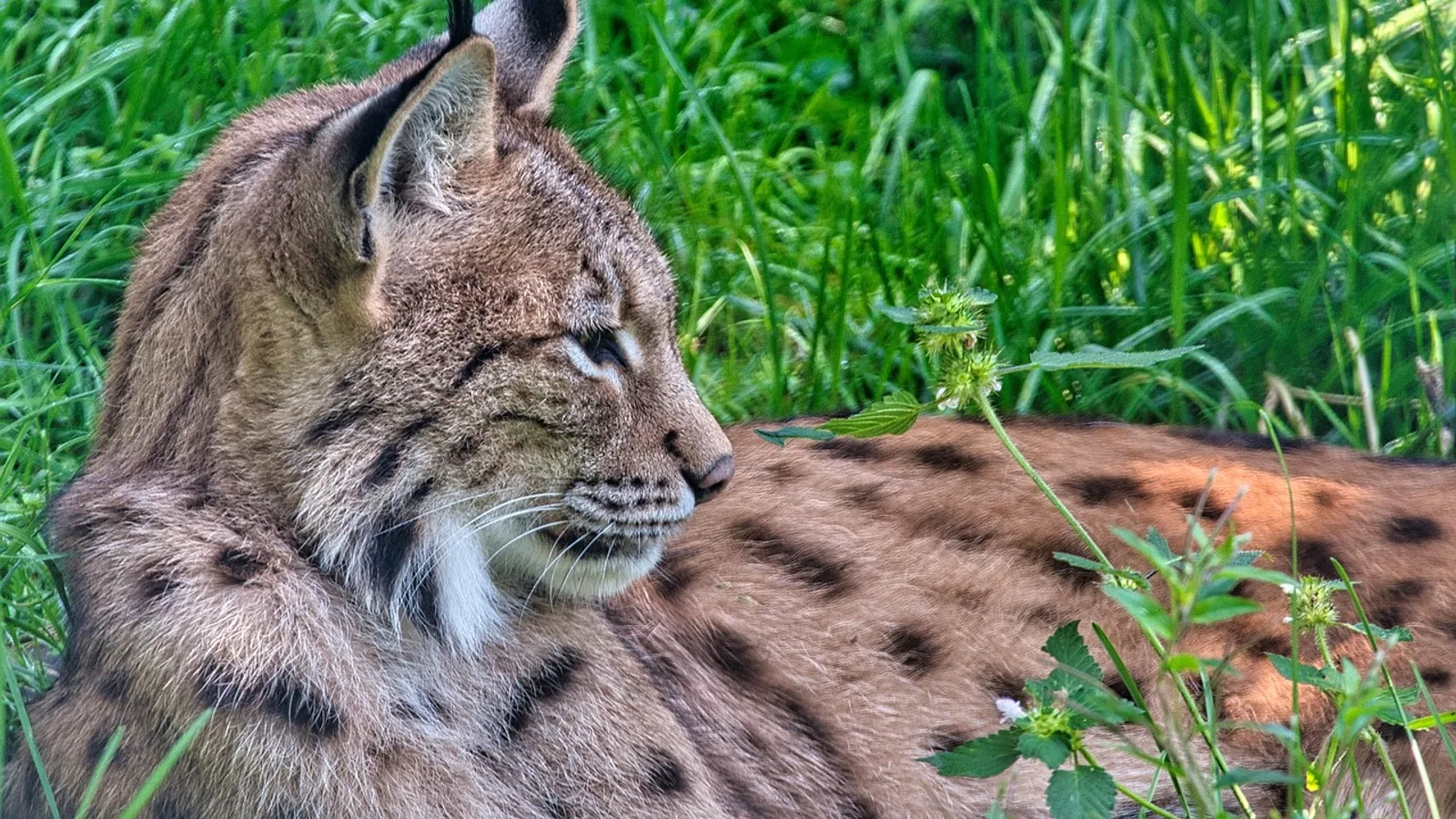
A "lynx cat" is usually one of four wild species in the genus Lynx: the Eurasian lynx, the Canada lynx, the Iberian lynx, and the bobcat. In everyday conversation, though, the same phrase often describes a domestic cat that happens to have lynx-like markings, ear tufts, or a short tail, and that animal is not a hybrid and not a wild lynx.
This guide separates the two meanings. It covers the four true lynx species, the traits that identify each one, the ecological pressures that shape them, and why the "domestic lynx" idea needs careful handling.
What Is a Lynx Cat?
The word "lynx" comes from the genus name Lynx, a group of medium-sized wild felids native to the Northern Hemisphere. All four species share a recognizable body plan: a short "bobbed" tail, long legs, large paws, prominent facial ruffs, and usually black tufts at the tips of the ears. They are solitary, territorial carnivores that hunt by stalking and pouncing rather than long chases.
A lynx is not a domestic cat breed, and it is not a domestic cat hybrid. It is a wild animal with wild dietary, spatial, and reproductive needs. When a pet product, breeder listing, or social media post calls a cat a "lynx," the animal is almost always a domestic cat (Felis catus) with a coat pattern that resembles a lynx. That distinction matters for welfare, legality, and public health.
The Four Lynx Species at a Glance
The table below summarizes the four species. Body mass figures are typical adult ranges for wild animals and vary with sex, region, and season.
| Species | Typical adult body mass | Core range | Typical habitat | Ear tufts | Facial ruff |
|---|---|---|---|---|---|
| Eurasian lynx (Lynx lynx) | Roughly 15 to 30 kg | Northern and central Europe, Scandinavia, Russia, Central Asia | Boreal and temperate forest, mountain forest, some open woodland | Long, black, prominent | Well developed |
| Canada lynx (Lynx canadensis) | Roughly 8 to 14 kg in adults | Boreal Canada and Alaska, with southern periphery in the northern US | Deep-snow boreal forest, conifer stands | Long, black, prominent | Well developed |
| Iberian lynx (Lynx pardinus) | Roughly 9 to 15 kg | Southern Spain and parts of Portugal | Mediterranean scrubland and open woodland | Moderate, black | Well developed |
| Bobcat (Lynx rufus) | Roughly 6 to 13 kg | Southern Canada through the United States into Mexico | Highly varied: forest, scrub, swamp, desert edge, suburban fringe | Shorter, less prominent | Present but often less full |
Two entries deserve emphasis. The Canada lynx is the smallest of the "big-pawed" northern lynx and is tightly tied to snowshoe hare cycles. The bobcat is the most widespread and the most adaptable, and it is the species most likely to be confused with a large domestic cat at a distance.
Eurasian Lynx (Lynx lynx)
The Eurasian lynx is the largest lynx and the most widely distributed wild felid in the Palearctic, the biogeographic region covering Europe and northern Asia. It ranges from Scandinavia and central Europe across Russia into Central Asia. Adults commonly weigh between roughly 15 and 30 kg, with males heavier than females.
Eurasian lynx occupy forested landscapes, from dense boreal forest to mountain woodland and forest edge. They are solitary and territorial, and they maintain large home ranges relative to their body size. Their diet is broad compared with the Canada lynx. It centers on ungulates such as roe deer and chamois where those are available, supplemented by hares, rodents, and birds.
Research on Eurasian lynx has documented both its parasites and its reproductive biology. A study of free-ranging lynx in Finland found Toxocara cati, a zoonotic roundworm shared with domestic cats, in 84.3 percent of 2,756 examined animals, with prevalence above 75 percent every year and no density dependence [1]. A separate study characterized male reproductive physiology, showing seasonal changes in testicular volume and peak semen quality in March, the middle of the breeding season [2]. A 2022 report described a novel Babesia genotype in a free-living Eurasian lynx in Turkey, named tentatively Babesia sp. lynx, and noted that data on babesias in lynx species are very limited [3]. A 2026 study in Kazakhstan molecularly identified Taenia lynciscapreoli in Eurasian lynx and Hydatigera taeniaeformis sensu stricto in domestic cats, the first molecular confirmation of both in Central Asia [4].
The takeaway for readers is that Eurasian lynx are wild predators with their own parasite fauna and seasonal biology. They are not candidates for pet keeping.
Canada Lynx (Lynx canadensis)
The Canada lynx is the classic "snow cat." It is built for deep snow and cold, with very large paws that spread its weight, long legs, and a thick winter coat. Adults typically weigh roughly 8 to 14 kg. Anesthesia records from free-ranging Canada lynx in one study listed weights from 8.54 to 13 kg for 15 adults, which fits the expected range [5].
The Canada lynx is a specialist. Its diet and its population dynamics revolve around the snowshoe hare, and hare abundance cycles drive lynx numbers across the boreal forest. This coupling is one reason the species is sensitive to change. A study of seven decades of harvest records in Ontario found that the southern range of the Canada lynx collapsed in the late 1940s, expanded to its largest extent in the mid-1960s, then contracted northward from the 1970s, with a slight expansion between 2010 and 2017 [6]. The authors attributed these shifts to the magnitude of the boreal lynx population cycle, connectivity to the boreal forest, and snow conditions, not to human landscape disturbance or competition [6].
Habitat studies reinforce the snow and forest link. Work in Ontario found that when suitable land cover was widely available, lynx avoided areas with less than 30 percent habitat, and that habitat loss rather than fragmentation drove occurrence patterns at the southern range periphery [7]. A separate study of sympatric Canada lynx and bobcat found that both selected shallower snow, higher snowshoe hare abundance, and more coniferous forest at fine scales, but the two species segregated at broader scales, with lynx in areas of deeper snow, more hare, and more conifer [8].
Canada lynx also show genetic and epigenetic structure that matters for conservation. A genome-scale study found cryptic epigenetic structuring and insular divergence, with Newfoundland lynx the most differentiated population at neutral genetic markers [9]. Work on a clock gene coding trinucleotide repeat found signatures of divergent selection between lynx and bobcat, with potential hybrid-mediated gene flow where ranges overlap [10]. A study of climate adaptation among trailing-edge populations identified 759 putatively adaptive loci from 329 genes, many associated with temperature during warm and dry periods [11].
Practical implications follow from this biology. Southern-range lynx depend on snow, conifer forest, and hare cycles, and connectivity between patches is critical. A study in the North Cascades found that traveling lynx used lower-quality habitats than those used within core areas, meaning connectivity conservation must protect linkages that would otherwise be dismissed as unsuitable [12]. Reproductive success in a southern population was tied to forest structure that supports food supply, consistent with income breeding rather than stored reserves [13]. Species distribution modeling across Washington, Montana, and Wyoming showed that regional variation affects how well habitat models transfer between areas [14].
Iberian Lynx (Lynx pardinus)
The Iberian lynx is the most endangered of the four species. It is native to the Iberian Peninsula, in southern Spain and parts of Portugal, and it lives in Mediterranean scrubland and open woodland rather than deep boreal forest. Adults typically weigh roughly 9 to 15 kg.
Its defining ecological trait is dietary specialization on the European rabbit. This dependence has made the Iberian lynx acutely vulnerable to rabbit declines caused by disease and habitat change, and it is a central reason the species has been the focus of intensive conservation effort.
The Iberian lynx is also relevant to an unusual clinical observation. A 2026 genomic study of Canada lynx identified 10 putatively adaptive genes linked to epilepsy, presenting candidate genes underlying reports of idiopathic epilepsy in captive populations of closely related lynx species, including L. lynx and L. pardinus [11]. That finding connects wild population genomics to health problems seen in captive settings.
For readers, the Iberian lynx is a reminder that "lynx" is not one uniform animal. A rabbit-dependent Mediterranean specialist and a hare-dependent boreal specialist face very different risks.
Bobcat (Lynx rufus)
The bobcat is the fourth lynx species and the most adaptable. It ranges from southern Canada through the United States into Mexico and occupies an unusually wide set of habitats: forest, scrub, swamp, desert edge, and the suburban fringe. Adults typically weigh roughly 6 to 13 kg, making the bobcat generally smaller than the Canada lynx and much smaller than the Eurasian lynx.
Two field marks separate the bobcat from other lynx. Its tail is short and black-tipped, and its ear tufts are shorter and less prominent than those of the Canada lynx or Eurasian lynx. Its facial ruff is present but often less full. These differences are the ones most useful to a careful observer.
Bobcat ecology overlaps with Canada lynx at range peripheries, and competition research has clarified how the two divide resources. A range-wide analysis found that lynx niches were less similar to bobcat niches in areas of sympatry than in allopatry, with a stronger reliance on snow cover driving lynx niche divergence, while bobcat increased niche breadth in zones of sympatry [15]. A related study found that Canada lynx showed higher total performance over a restricted set of variables related to snow and altitude, while bobcat performed well across most variables [16]. In other words, snow is the axis that lets lynx hold ground against a more flexible competitor.
Bobcats carry their own parasite load. A study of 25 bobcats from Mississippi found Sarcocystis infections in 84 percent by a combination of methods, with at least three morphologic types of sarcocysts and molecular diagnosis of Sarcocystis caninum, S. felis, Sarcocystis lutrae, and S. neurona [17]. This is normal wildlife parasitology, not a reason for alarm, but it is a reminder that wild felids are not interchangeable with pets.
Key Distinctions Between the Four Species
Several distinctions do the most work when identifying a lynx or explaining the differences.
The bobcat is smaller than the Canada lynx on average, has a black-tipped tail, and has less prominent ear tufts. The Canada lynx has very large, snowshoe-like paws and is tied to snowshoe hare cycles and deep-snow boreal forest. The Iberian lynx is critically endangered and depends heavily on rabbits. The Eurasian lynx is the largest and most widely distributed, with a broader diet that includes ungulates.
Ear tufts and ruffs are useful but not diagnostic on their own. Tuft length varies with age, season, and individual. The tail and the paws are more reliable field characters when combined with range and habitat.
What "Domestic Lynx Cat" Actually Means
Most searches for a "lynx cat" are about domestic cats. The honest answer is that a domestic lynx cat is a domestic cat with lynx-like appearance, not a lynx hybrid.
Domestic cats and wild lynx are different species with different chromosome numbers, different social systems, and different reproductive timing. There is no established, common domestic lynx hybrid breed. Claims about "lynx hybrids" for sale are a recurring source of confusion and, in many cases, misrepresentation.
What people usually mean falls into a few categories:
- A domestic cat with lynx-point coloration, a coat pattern with pale body and darker points, sometimes called a lynx point.
- A cat with naturally tufted ears, a short tail, or a heavy ruff, which can look lynx-like without any lynx ancestry.
- A large domestic cat, such as a Maine Coon or Norwegian Forest Cat, whose size and ear tufts invite the comparison.
- A wild bobcat or lynx seen near a home and mistaken for a domestic cat, or the reverse.
The last category is the one with real consequences. A bobcat is a wild carnivore. It should not be approached, fed, or handled. If you see a wild felid near your home, contact your state wildlife agency rather than attempting to intervene.
Why Lynx Are Not Pets
Wild lynx species are not domesticated, and they are not appropriate pets. They have large home ranges, specialized diets, seasonal reproductive cycles, and parasite faunas that differ from domestic cats. The Eurasian lynx study in Finland documented Toxocara cati prevalence above 75 percent every year across 2,756 animals [1], and the bobcat study documented multiple Sarcocystis species in muscle tissue [17]. These are normal findings in wild populations and part of why wildlife belongs in the wild.
Legal status reinforces the point. In the United States, native wild felids are regulated by federal and state law, and keeping them generally requires permits that are not issued for ordinary pet ownership. The Iberian lynx is critically endangered, and the Canada lynx is a species of conservation concern across much of its southern range.
Common Mistakes and Limitations
A few mistakes come up repeatedly.
The first is assuming that lynx-like markings mean lynx ancestry. They do not. Coat pattern in domestic cats is controlled by domestic cat genetics.
The second is treating the four lynx species as interchangeable. They differ in size, range, habitat, diet, and conservation status. A Canada lynx is not a small Eurasian lynx, and a bobcat is not a southern Canada lynx.
The third is underestimating the role of snow and hare cycles for Canada lynx. The Ontario harvest record shows how tightly southern range extent tracked the boreal population cycle and snow conditions [6], and habitat modeling shows sensitivity to habitat amount [7].
The fourth is confusing a wild bobcat with a domestic cat. The tail and ear tufts are the quickest field checks, and a wild animal should be left alone.
The fifth is overreading a single trait. Ear tufts, ruffs, and paw size vary. Use range, habitat, tail, and overall proportions together.
One limitation applies to everything here. Individual animals vary, and any specific question about a pet's health, behavior, or legal status needs a veterinarian or the relevant wildlife agency. This guide describes species-level biology, not individual diagnosis.
Frequently Asked Questions
What is a lynx cat?
A lynx cat is usually one of four wild species in the genus Lynx: the Eurasian lynx, Canada lynx, Iberian lynx, or bobcat. In casual use, it often means a domestic cat with lynx-like markings.
Is a lynx cat a domestic cat breed?
No. There is no domestic lynx breed. Domestic cats with lynx-like coats are ordinary domestic cats, not hybrids.
Can a domestic cat breed with a lynx?
No. Domestic cats and wild lynx are different species and do not form a common domestic hybrid breed.
How do you tell a bobcat from a Canada lynx?
A bobcat is generally smaller, has a black-tipped tail, and has shorter, less prominent ear tufts. A Canada lynx has very large paws and is tied to deep-snow boreal forest.
Which lynx species is the largest?
The Eurasian lynx is the largest, with adults commonly around 15 to 30 kg.
Which lynx species is the most endangered?
The Iberian lynx is critically endangered and depends heavily on rabbits.
Why are Canada lynx tied to snowshoe hares?
Snowshoe hares are their main prey, and hare cycles drive lynx population dynamics and southern range extent.
Can you keep a lynx as a pet?
No. Wild lynx are not domesticated, they have specialized needs, and keeping native wild felids generally requires permits that are not issued for ordinary pet ownership.
Related Articles
- trait biology definition
- Trait Biology
- trait in biology
- traits biology definition
- define trait biology
- What Is a Trait in Biology? Definition and Examples
- Red Junglefowl: Ancestor of the Domestic Chicken
- Domestic Cat Breeding: Cycle, Timing, and Care
Sources
- High Toxocara cati prevalence in wild, free-ranging Eurasian lynx (Lynx lynx) in Finland, 1999-2015.
- Investigations on reproductive physiology in the male Eurasian lynx (Lynx lynx).
- Description of a novel Babesia sp. genotype from a naturally infected Eurasian lynx (Lynx lynx) in Anatolia, Turkey, with remarks on its morphology and phylogenetic relation to other piroplasmid species.
- First molecular identification and characterization of Taenia lynciscapreoli in the Eurasian lynx (Lynx lynx) and Hydatigera taeniaeformis sensu stricto in domestic cats (Felis catus) from Central Asia.
- COMPARISON OF KETAMINE-DEXMEDETOMIDINE AND KETAMINE-DEXMEDETOMIDINE-MIDAZOLAM PROTOCOLS FOR ANESTHESIA IN FREE-RANGING CANADA LYNX (LYNX CANADENSIS).
- Seven decades of southern range dynamics of Canada lynx.
- Habitat loss, not fragmentation, drives occurrence patterns of Canada lynx at the southern range periphery.
- Fine-scale habitat selection by sympatric Canada lynx and bobcat.
- Genome-scale sampling suggests cryptic epigenetic structuring and insular divergence in Canada lynx.
- Spatial and environmental influences on selection in a clock gene coding trinucleotide repeat in Canada lynx (Lynx canadensis).
- Assessing Climate Adaptation Among Canada Lynx (Lynx canadensis) Populations at the Trailing Edge.
- Navigating fragmented landscapes: Canada lynx brave poor quality habitats while traveling.
- Forest structure provides the income for reproductive success in a southern population of Canada lynx.
- Improved prediction of Canada lynx distribution through regional model transferability and data efficiency.
- Evidence for large-scale effects of competition: niche displacement in Canada lynx and bobcat.
- Reconsidering the specialist-generalist paradigm in niche breadth dynamics: resource gradient selection by Canada lynx and bobcat.
- TRICHINELLA AND AT LEAST THREE SPECIES OF SARCOCYSTIS PARASITIZE THE MUSCLES OF BOBCATS (LYNX RUFUS) FROM MISSISSIPPI.