Hardening of Water: Causes and Effects
By Dr. Zubair Khalid, DVM, MS, PhD ·
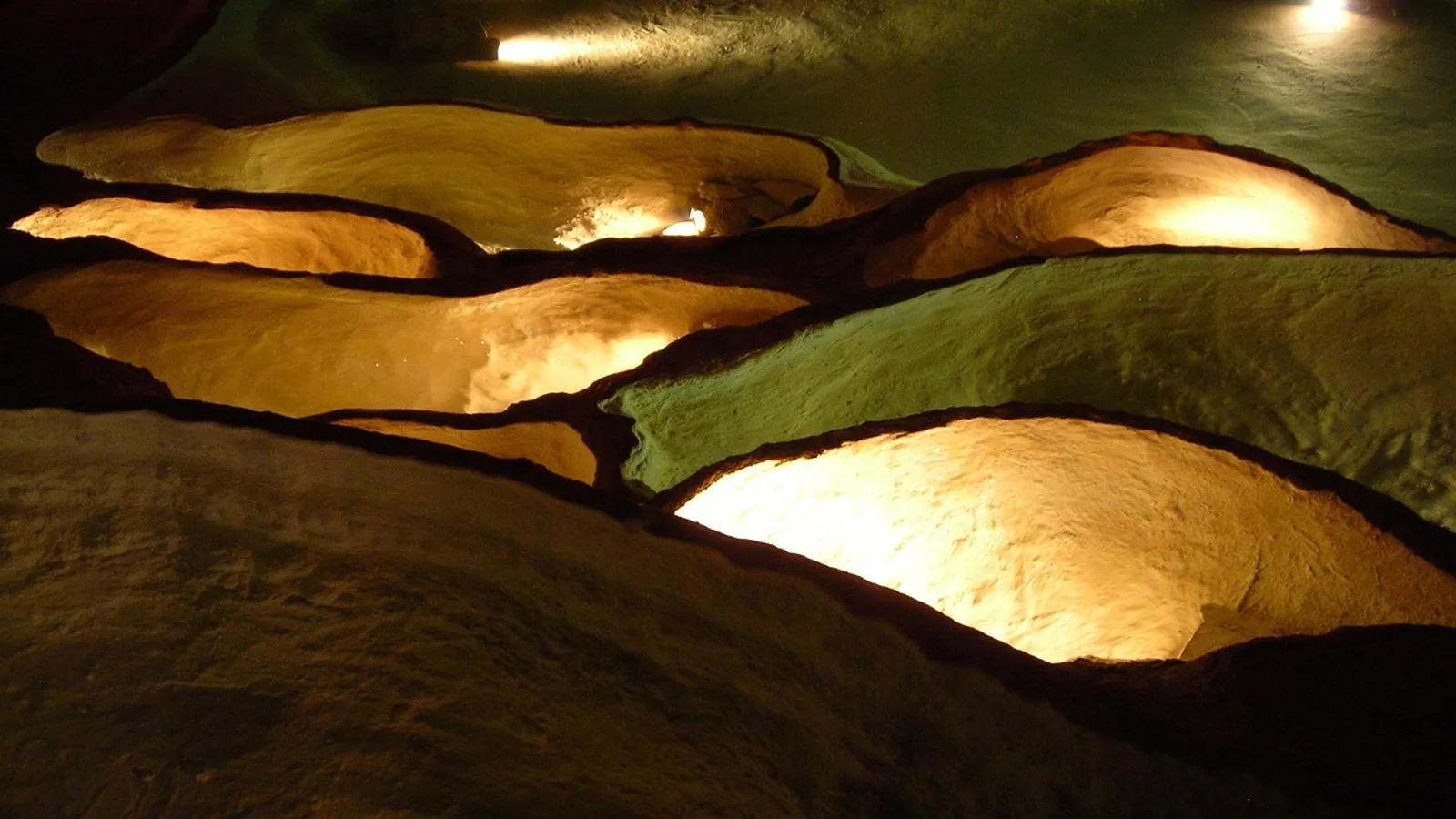
Hardening of water is the natural enrichment of a water supply with dissolved divalent metal ions, chiefly calcium (Ca²⁺) and magnesium (Mg²⁺), and hardness is reported as an equivalent concentration of calcium carbonate (CaCO₃) in milligrams per liter. The process is a geochemical one: as water percolates through limestone, dolomite, gypsum, and other mineral beds, it dissolves these ions, and the resulting concentration determines whether the water is classified as soft, moderately hard, hard, or very hard.
Hardness matters far beyond the soap scum on a shower door. It governs how much detergent a household must buy, how quickly scale closes off a boiler or a drip irrigation line, how a freshwater organism responds to a toxic metal, and how much acid a lake can absorb before its chemistry shifts. Hardness is also one of the few water-quality parameters a person can estimate at home with a simple titration kit, which makes it a practical entry point into aquatic chemistry for students, aquarists, aquaculturists, and anyone managing a well or a pond.
What Hardness Actually Measures
Hardness is not a single substance. It is an operationally defined sum. The classical definition counts all polyvalent metal cations, but in nearly all natural freshwaters the only two that matter at meaningful concentrations are calcium and magnesium, with smaller contributions from strontium, iron, manganese, and zinc. Because Ca²⁺ and Mg²⁺ have different atomic masses and different charges per unit mass, chemists convert both to a common currency: the equivalent weight of calcium carbonate. That lets a lab report a single number even when the calcium-to-magnesium ratio varies from source to source.
The practical consequence is that two waters can have identical hardness values and behave quite differently. A water dominated by calcium carbonate will scale a kettle and precipitate on boiling. A water with the same total hardness dominated by magnesium sulfate will not scale on boiling at all but will still consume soap. This is why the temporary versus permanent distinction matters as much as the total number.
The Standard Hardness Scale
The United States Geological Survey classification, used in large population studies of drinking water, divides supplies into four bands [1]:
| Category | Total hardness (mg/L as CaCO₃) | Typical behavior |
|---|---|---|
| Soft | less than 60 | Lathers easily, low buffering, corrosive to some plumbing |
| Moderately hard | 60 to 120 | Moderate soap demand, mild scaling |
| Hard | 120 to 180 | Visible scale, high soap demand |
| Very hard | greater than 180 | Rapid scale, poor lather, treatment usually needed |
These bands are conventions, not sharp biological thresholds. A river at 55 mg/L and one at 65 mg/L are functionally similar, and species tolerances overlap across the boundaries.
Where the Minerals Come From
The hardening of water begins in the catchment. Rainwater itself is nearly pure and has very low hardness. As it moves through soil and rock, two processes add calcium and magnesium.
The first is carbonate dissolution. Limestone is calcium carbonate, and dolomite is a mixed calcium-magnesium carbonate. When water charged with dissolved carbon dioxide contacts these rocks, the carbonic acid attacks the mineral lattice and releases Ca²⁺ and Mg²⁺ along with bicarbonate (HCO₃⁻). This is the dominant pathway in karst regions and produces what is called carbonate hardness.
The second is evaporite and silicate weathering. Gypsum (calcium sulfate) and magnesium-bearing sulfate or chloride deposits dissolve without needing acid, releasing Ca²⁺ or Mg²⁺ paired with sulfate (SO₄²⁻) or chloride (Cl⁻). Silicate weathering is slower but adds the same cations over geologic time. These pathways produce non-carbonate hardness.
A useful field observation: alpine and high-elevation lakes fed mainly by precipitation and snowmelt are consistently soft. A survey of six lakes in the Kailash landscape of the upper Bhaderwah region found low to very low values for calcium, magnesium, and total hardness, with a calcium-bicarbonate water type and a chemistry controlled by precipitation rather than rock dissolution [2]. Move downstream into limestone terrain and the same water can double or triple in hardness within a few kilometers.
Groundwater is where extremes appear. Because it has longer contact time with aquifer minerals, groundwater is usually harder than surface water in the same region. In Egypt's Siwa Oasis, groundwater reaches a total hardness of roughly 3,313 mg/L as CaCO₃, with about 609 mg/L magnesium and 325 mg/L calcium, values far above any drinking-water guideline and severe enough to damage infrastructure [3]. At the other end, a survey of treated and untreated water in the Brazilian semiarid Seridó Ocidental region recorded calcium up to 105 mg/L and magnesium up to 124 mg/L, alongside sodium up to 5,000 mg/L and chloride up to 1,579 mg/L, showing how hardness travels together with salinity in arid settings [4].
Temporary Hardness: The Carbonate Fraction
Temporary hardness is the portion of hardness associated with bicarbonate. It is called temporary because it can be removed by boiling, and the mechanism is straightforward chemistry.
When water containing dissolved calcium bicarbonate is heated, carbon dioxide is driven off and the equilibrium shifts:
Ca²⁺ + 2HCO₃⁻ → CaCO₃ (solid) + CO₂ + H₂O
The calcium carbonate precipitates as a solid. That solid is scale. It deposits on the hottest surfaces first, which is why kettles, water heaters, heat exchangers, and the walls of a boiling pot accumulate a chalky crust. Magnesium behaves similarly, though magnesium carbonate is more soluble and tends to form a softer, less adherent deposit.
The key point for students is that boiling does not remove hardness from the water. It moves the hardness from the dissolved phase into the solid phase. The total mineral content of the pot is unchanged. If you boil a liter of hard water dry, you get the same mass of residue as if you had evaporated it at room temperature, just faster and in a different crystal form.
This precipitation reaction has consequences beyond plumbing. In coffee brewing, adding both calcium and bicarbonate produced smaller sensory differences than bicarbonate alone, and the effect was attributed to calcium carbonate precipitation reducing the effective bicarbonate concentration [5]. The same precipitation is what forms the scale ring inside a kettle.
Permanent Hardness: The Sulfate and Chloride Fraction
Permanent hardness is the portion associated with sulfate and chloride rather than bicarbonate. It cannot be removed by boiling because calcium sulfate and magnesium sulfate remain soluble at the temperatures reached in domestic and most industrial heating. Magnesium sulfate in particular is highly soluble, so a magnesium-sulfate water will not scale a boiler no matter how hard it is by the CaCO₃ scale.
Permanent hardness is removed by ion exchange, by lime-soda softening, or by adsorption onto engineered materials. Ion exchange is the standard domestic approach: a resin bead carries sodium ions, and as hard water passes through, the resin swaps two sodium ions for each Ca²⁺ or Mg²⁺. The resin is regenerated with a concentrated sodium chloride brine. This is why a water softener needs periodic salt, and why softened water has elevated sodium, a consideration for anyone on a sodium-restricted diet.
Adsorption-based softening is an active research area. A graphene oxide and biopolymer nanocomposite removed calcium and magnesium with Langmuir adsorption capacities of 7.98 mg per gram for Ca²⁺ and 6.46 mg per gram for Mg²⁺, with optimal performance near neutral pH [6]. A magnesium-silicate zeolite synthesized from natural talc achieved batch capacities of 268.8 mg per gram for calcium and 206.9 mg per gram for magnesium, and in continuous fixed-bed tests with real Siwa Oasis groundwater it reduced calcium and magnesium to acceptable levels across multiple reuse cycles [3]. Modified ceramic adsorbents in a continuous column reached removal efficiencies above 99 percent for total hardness, calcium, and magnesium [7]. These numbers illustrate the range of engineering responses available once hardness is identified as a problem.
Comparison Table: Temporary vs Permanent Hardness
| Feature | Temporary (carbonate) hardness | Permanent (non-carbonate) hardness |
|---|---|---|
| Dominant ions | Ca²⁺, Mg²⁺ paired with HCO₃⁻ | Ca²⁺, Mg²⁺ paired with SO₄²⁻ or Cl⁻ |
| Mineral sources | Limestone, dolomite, chalk | Gypsum, magnesium sulfate deposits, evaporites |
| Effect of boiling | Removed as CaCO₃ scale | Not removed, stays dissolved |
| Scale character | Hard, adherent carbonate crust | Little or no scaling on boiling |
| Removal method | Boiling, lime softening, ion exchange | Ion exchange, adsorption, reverse osmosis |
| Ecological impact | Raises alkalinity and buffering capacity | Raises salinity and sulfate load without buffering |
| Typical setting | Karst springs, limestone aquifers | Arid groundwater, gypsum-rich basins |
How Hardness Is Measured
The reference method is titration with EDTA (ethylenediaminetetraacetic acid), a chelating agent that binds calcium and magnesium. A known volume of sample is buffered to pH 10 with an ammonia-ammonium chloride solution, a small amount of Eriochrome Black T indicator is added, and the sample turns wine red. EDTA is then added dropwise until the color shifts to blue, and the volume consumed is proportional to the total divalent cation concentration. Results are reported as mg/L CaCO₃.
Several alternatives exist. Atomic absorption or inductively coupled plasma spectroscopy measures calcium and magnesium separately, which is more informative because it reveals the Ca:Mg ratio. Electrical conductivity is a rough proxy, since dissolved ions conduct current, but conductivity responds to all ions including sodium and chloride, so it overestimates hardness in saline water. Test strips give a quick field estimate within a broad band.
For a pond or an aquarium, the practical measurement is a combination of total hardness (general hardness, GH) and carbonate hardness (KH). GH tracks calcium and magnesium. KH tracks bicarbonate and carbonate, which is the buffering capacity. A water can have high GH and low KH, or the reverse, and the two drive different problems.
Ecological Effects of Hardness
Hardness is one of the most influential variables in freshwater ecology because calcium and magnesium are both nutrients and physiological regulators.
Buffering and pH Stability
Carbonate hardness is the primary buffering system in most freshwaters. Bicarbonate and carbonate ions neutralize added acid, so a hard, carbonate-rich lake resists pH swings that would send a soft lake into a rapid acidification spiral. This is why soft-water lakes in granitic catchments are the first to suffer from acid deposition, while limestone-fed lakes remain near neutral. For an aquarist, low KH means pH can crash overnight, and high KH means pH is stable but difficult to adjust downward.
Calcium and Magnesium as Nutrients
Calcium is required for shell and exoskeleton formation in mollusks and crustaceans, for bone in fish, and for cell signaling in all organisms. Magnesium is a cofactor for hundreds of enzymes and sits at the center of the chlorophyll molecule. Soft water can be genuinely limiting. In very soft, low-calcium water, snails and crayfish struggle to build shells, and molting failures become common. This is why aquarists keeping invertebrates often add a calcium source.
Pollutant Toxicity and the Protective Effect
The best-documented ecological role of hardness is its modulation of metal toxicity. A meta-analysis of 32 studies found that 20 of 23 qualitative studies reported significant inverse correlations between water hardness and pollutant toxicity, and the quantitative pooled analysis confirmed a statistically significant protective effect [8]. The mechanism is competitive: calcium and magnesium ions occupy the same uptake sites on gill surfaces that toxic metals such as cadmium, lead, and copper would otherwise use. High hardness therefore reduces the bioavailability of the pollutant and mitigates its toxic effect on freshwater organisms [8]. This is why water-quality criteria for metals are hardness-dependent, and why a copper dose that is lethal in soft water may be harmless in hard water.
The relationship is not unlimited. The same meta-analysis noted significant heterogeneity, with developmental stage of the species and chemical form of the pollutant both influencing the outcome [8]. Very high hardness can itself stress organisms adapted to soft water, and the protective effect does not extend to all contaminants.
Species-Specific Optima
Optimal hardness for freshwater organisms is species specific [8]. Soft-water specialists such as many tropical tetras, discus, and certain amphibians do poorly in hard water, while livebearers, cichlids from rift lakes, and most mollusks thrive in it. This is why "hardness" cannot be reduced to a single good or bad number. A value that is ideal for one species is stressful for another.
Hardness and Pathogen Ecology
Hardness also appears in disease ecology. In a study of cholera-endemic reservoirs in north Cameroon, water hardness including calcium and magnesium was analyzed alongside other physicochemical parameters to assess its influence on the interaction between Vibrio cholerae and chironomid larvae, which act as hosts that shield the bacterium from environmental stressors [9]. This kind of work shows that hardness is one variable in a complex web of water chemistry, host biology, and pathogen persistence.
Hardness in Managed Water Systems
In aquaculture, hardness is monitored routinely. A winter survey of 19 fishponds in Romania tracked calcium, magnesium, the Ca:Mg ratio, total hardness, alkalinity, and a range of other parameters alongside metals and microplastics, illustrating how hardness sits within a broader water-quality panel that managers use to protect fish health [10].
In livestock production, hardness has direct operational costs. A study of 45 water samples from swine sites across six states found total hardness ranging from 142 to 1,181 mg/L CaCO₃, with an average of 441.2 mg/L [11]. The amount of citric acid product needed to drop pH to 4.0 increased as hardness, calcium, and magnesium increased, meaning harder water costs more to acidify [11]. This is a concrete example of hardness translating directly into input cost.
Hardness and Mineral Balance in Practice
Hardness is a mineral measurement, and mineral composition of drinking water is an active research area. A prospective cohort of 414,587 UK Biobank participants found distinct dose-response patterns between water minerals and incident chronic kidney disease, with magnesium showing a clear linear association and calcium carbonate and calcium showing nonlinear, inverted U-shaped patterns [12]. A separate cohort of 328,920 participants found higher magnesium inversely associated with incident type 2 diabetes, while calcium and CaCO₃ showed no significant association [13]. A study of 324,136 participants observed U-shaped associations between CaCO₃ and cardiovascular death and between calcium and cardiovascular events, with each log-transformed magnesium interquartile range increase associated with decreased cardiovascular risk [14].
Other cohort work has examined digestive diseases, finding that higher hardness above 180 mg/L CaCO₃ was inversely associated with several conditions including dyspepsia, constipation, and gallbladder disease compared with soft water [1]. A study of 371,668 participants found hard water exposure associated with reduced risk of symptomatic abdominal aortic aneurysm regardless of genetic risk [15]. An ecological study of England found water hardness associated with a significant reduction in childhood fracture hospital admissions [16]. A cohort of 218,339 participants found higher calcium in domestic water positively associated with incident metabolic dysfunction-associated steatotic liver disease, with several circulating metabolites mediating the association [17].
These findings are associations from observational cohorts, not causal demonstrations, and they sit outside the ecological scope of this guide. They are relevant here only to establish that water hardness is a measured exposure variable in large-scale research, which is why accurate classification and reporting matter.
Common Mistakes and Limitations
Confusing hardness with alkalinity. Hardness is calcium plus magnesium. Alkalinity is the acid-neutralizing capacity, dominated by bicarbonate and carbonate. They often correlate because carbonate hardness contributes to both, but permanent hardness adds no alkalinity. A gypsum-rich water can be very hard and poorly buffered.
Assuming boiling softens water. Boiling removes only the carbonate fraction, and it does so by precipitating scale onto your equipment. The dissolved solids are still in the pot. For permanent hardness, boiling does nothing at all.
Reading a single number as a complete description. Total hardness as CaCO₃ hides the Ca:Mg ratio and the anion pairing. Two waters at 200 mg/L can behave completely differently in a boiler, a fish tank, or a brewing kettle.
Treating hardness as inherently bad. In ecology, moderate to high hardness is protective against metal toxicity and stabilizes pH. In soft-water aquariums, raising hardness can harm species adapted to low-mineral conditions.
Ignoring the sodium cost of softening. Ion-exchange softening replaces calcium and magnesium with sodium. The water is softer but not lower in total dissolved solids.
Extrapolating from one site. Hardness varies enormously over short distances, between surface water and groundwater, and seasonally. A single test is a snapshot, not a baseline.
Overreading observational health associations. Cohort findings describe population-level patterns with confounders and nonlinear dose-response. They do not translate into individual recommendations.
Individual water supplies and individual animals require case-specific assessment by a qualified professional, and a veterinarian should be consulted for any animal health concern.
Quick Review
- Hardness is dissolved Ca²⁺ and Mg²⁺, reported as mg/L CaCO₃.
- Standard bands: soft below 60, moderately hard 60 to 120, hard 120 to 180, very hard above 180.
- Temporary hardness is the bicarbonate fraction and precipitates as CaCO₃ scale on boiling.
- Permanent hardness is the sulfate and chloride fraction and is not removed by boiling.
- Carbonate hardness provides buffering and stabilizes pH in lakes and aquariums.
- High hardness reduces metal toxicity by competing for uptake sites on gill surfaces [8].
- Optimal hardness is species specific, so no single value suits all aquatic life [8].
Frequently Asked Questions
What is the difference between temporary and permanent hardness?
Temporary hardness is calcium and magnesium paired with bicarbonate and is removed by boiling as calcium carbonate scale. Permanent hardness is paired with sulfate or chloride and stays dissolved through boiling, so it requires ion exchange or another softening method.
Does boiling water make it soft?
Boiling removes only the carbonate fraction and deposits it as scale on the container or heating element. The total mineral content is unchanged, and any sulfate or chloride hardness remains fully dissolved.
What hardness level is considered hard water?
Water above 180 mg/L as CaCO₃ is classified as very hard on the United States Geological Survey scale, and 120 to 180 mg/L is classified as hard [1].
Why does hard water need more soap?
Calcium and magnesium ions react with soap fatty acids to form an insoluble precipitate, consuming soap before it can lather. The higher the hardness, the more soap is lost to this reaction.
Is hard water bad for fish and aquatic life?
Not inherently. Hardness is species specific, and moderate to high hardness protects freshwater organisms against metal toxicity by competing with pollutants for uptake sites on gill surfaces [8]. Soft-water specialists can be stressed by hard water, and hard-water specialists by soft water.
Can hardness change over time?
Yes. Hardness varies with rainfall, snowmelt dilution, aquifer contact time, and seasonal flow. Groundwater is typically harder than surface water in the same region because of longer mineral contact.
Related Articles
- Point Mutation Definition: Types, Causes, and Effects
- Genetic Mutation: Types, Causes, and Effects on Human Health
- Dog Not Drinking Water: Causes and How to Encourage Hydration
- Cat Vomiting After Drinking Water: Causes and When to Worry
- Dog Vomiting After Drinking Water: Causes and Next Steps
- Batch Effects in RNA-seq: Causes, Detection, and Mitigation Strategies for Multi-Batch Studies
Sources
- Water hardness and digestive diseases: a large-scale population-based prospective cohort study.
- Are the headwaters clean? An assessment of water quality of alpine lakes in Kailash landscape, upper Bhaderwah, Jammu & Kashmir.
- Sustainable hard water treatment using talc derived magnesium silicate zeolite evaluated by statistical physics and field validation in Siwa Oasis.
- Radiological, chemical, and microbiological risks in drinking water from the Brazilian semiarid: Public health implications.
- Impact of Water Composition on Coffee Sensory Properties: A Comprehensive Analysis.
- Graphene oxide - polymer nanocomposites for efficient water hardness removal: a step towards healthier drinking water.
- Investigation of water softening using ceramic adsorbents in a continuous adsorption process.
- The impact of increased water hardness on pollutant toxicity in freshwater aquatic organisms.
- Chironomid larvae, important hosts facilitating the persistence of Vibrio cholerae in water reservoirs of a cholera-endemic area of north Cameroon.
- Water Quality Metrics of Fishponds During the Cold Season, with a Focus on the Potential Risk of Metals and Microplastics.
- Relationship between water hardness, pH, and organic acid requirement for effective water acidification in swine operations.
- Association Between Domestic Water Hardness and Chronic Kidney Disease: A Prospective Cohort Study From the UK Biobank.
- Associations between domestic water hardness and incident type 2 diabetes and the mediating role of metabolomics.
- Associations between domestic water hardness and risk of experiencing 15 different cardiovascular events: a prospective cohort study of 324,136 United Kingdom Biobank participants.
- Domestic water hardness, genetic susceptibility, and risk of symptomatic abdominal aortic aneurysm: a cohort study of UK biobank.
- Association between drinking water hardness and incidence of hospitalization for childhood fracture: an ecological study of England.
- Circulating metabolite signatures mediating the association between minerals in domestic water and incident MASLD: a prospective cohort study.