Capillary Action: Definition, Examples, and Mechanism
By Dr. Zubair Khalid, DVM, MS, PhD ·
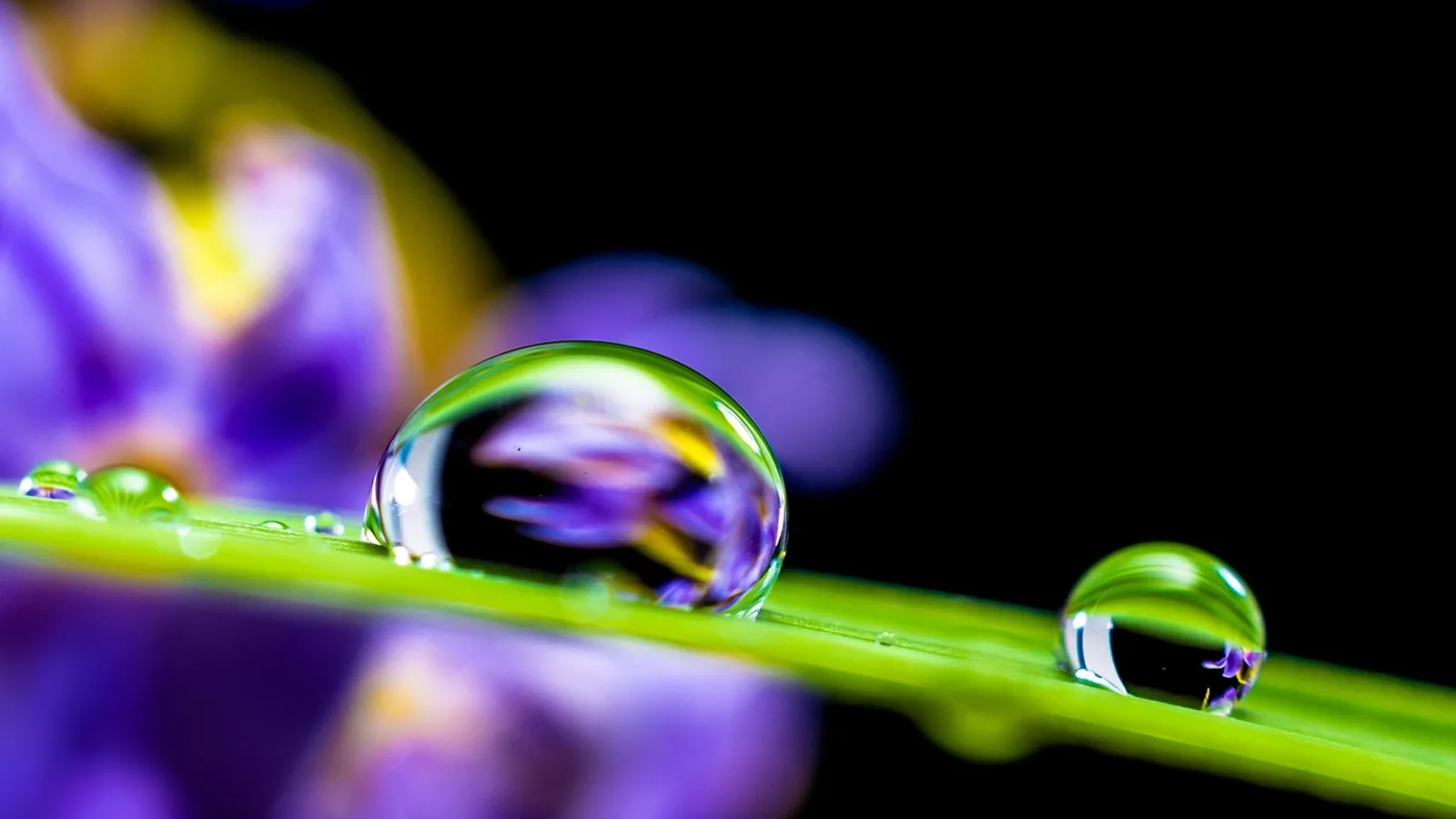
Capillary action is the spontaneous movement of a liquid into a narrow space, such as a thin tube or a porous material, without any external pumping. It happens because adhesive forces between the liquid and the surrounding surface pull the liquid forward while cohesive forces between liquid molecules hold the column together, and surface tension converts that pull into a pressure difference that lifts the liquid.
That single definition hides a lot of physics that matters in biology, materials science, and medicine. Capillary action explains why water climbs a paper towel, why a glass capillary tube shows a curved water surface, and why soil holds moisture against gravity. It also sits at the center of a persistent misunderstanding about trees: many students learn that capillary action lifts water to the top of a redwood, which is wrong. Capillary rise alone cannot do that. Plants use a different, tension-driven mechanism for long-distance transport, and capillary forces play a supporting role rather than the lead.
This guide walks through the mechanism step by step, gives the governing equation in plain language, works a concrete example with water in a glass tube, contrasts water with mercury, and separates the biology that capillary action really explains from the biology it does not.
What Capillary Action Is
Capillary action, also called capillarity or capillary rise, is the tendency of a liquid to flow into narrow channels or porous media because of intermolecular forces. Two forces cooperate. Adhesion is the attraction between the liquid molecules and the molecules of the solid surface. Cohesion is the attraction between liquid molecules themselves. When adhesion to the wall is stronger than the cohesive pull among liquid molecules, the liquid wets the surface and climbs. When cohesion dominates, the liquid resists wetting and the surface depresses instead.
The word "capillary" comes from the Latin for hair, because the effect is most visible in hair-thin tubes. The narrower the channel, the higher the liquid rises, which is why the effect is easy to see in a glass capillary but nearly invisible in a wide drinking straw.
Why Capillary Action Matters
Capillary action is one of the few physical phenomena that shows up in almost every branch of life science. In plant physiology, it contributes to water movement in the fine pores of cell walls and soil. In medicine, it drives lateral flow in diagnostic test strips and explains wicking in wound dressings. In soil science, it controls how water moves upward from a water table toward plant roots. In materials engineering, it governs how liquids penetrate fabrics, paper, concrete, and composite laminates. Understanding the mechanism lets you predict when a liquid will climb, how high, and how fast, which is often the difference between a working assay and a failed one.
The Mechanism, Step by Step
The mechanism has four linked parts. Each one depends on the others.
Step 1: Adhesion Creates a Contact Angle
When a liquid meets a solid, the molecules at the interface rearrange. If the liquid molecules are strongly attracted to the solid, the liquid spreads along the surface. If the liquid molecules prefer each other, the liquid beads up. The angle the liquid surface makes with the solid wall is called the contact angle, written as theta. A small contact angle (close to 0 degrees) means strong wetting. A large contact angle (above 90 degrees) means the liquid does not wet the surface.
Step 2: Surface Tension Curves the Surface
Surface tension is the energy cost of creating new liquid surface, and it makes a free liquid surface behave like a stretched elastic film. Inside a narrow tube, the liquid surface is not flat. It curves into a shape called a meniscus. The curvature exists because the liquid must meet the wall at the contact angle, and the geometry of a round tube forces the surface into a curved cap.
Step 3: Curvature Creates a Pressure Difference
The Young-Laplace relationship states that a curved liquid surface supports a pressure difference across it. The tighter the curve, the larger the pressure difference. Inside a wetting meniscus, the pressure just below the curved surface is lower than the pressure in the surrounding air. That pressure deficit is the driving force for capillary rise. It is not a pump and it is not a vacuum. It is a direct consequence of surface curvature.
Step 4: Cohesion Holds the Column Together
As the low-pressure zone pulls liquid upward, cohesion keeps the rising liquid connected to the liquid below. Water is exceptionally good at this because each water molecule can form hydrogen bonds with up to four neighbors. The continuous hydrogen-bonded network transmits the pull down the column, so the whole liquid rises rather than just the top layer. If cohesion fails, the column breaks and capillary rise stops.
The Jurin Relationship
The standard equation for capillary rise in a narrow tube is known as Jurin's law. In words, the equilibrium height depends on surface tension, contact angle, tube radius, liquid density, and gravity:
h = (2 gamma cos(theta)) / (rho g r)
Where:
- h is the equilibrium height of the liquid column
- gamma is the surface tension of the liquid
- theta is the contact angle between liquid and tube wall
- rho is the density of the liquid
- g is the acceleration due to gravity
- r is the radius of the tube
The equation describes equilibrium, meaning the height at which the upward capillary force exactly balances the weight of the raised liquid column. Height rises with surface tension and with the cosine of the contact angle. Height falls with tube radius, liquid density, and gravity. The inverse relationship with radius is the most striking feature. Halve the radius and you double the height, as long as the tube is narrow enough that the meniscus shape stays close to a spherical cap.
A 2018 analysis of the exact meniscus shape showed that Jurin's law and its modified forms introduce serious errors as tube diameter grows, because the real meniscus profile must be computed from the Young-Laplace equation rather than approximated as a simple spherical cap [1]. For narrow tubes, the classic form is accurate enough for teaching and most practical work.
Variables That Control Capillary Height
| Variable | Symbol | Typical Unit | Effect on Height |
|---|---|---|---|
| Surface tension | gamma | N/m (newtons per meter) | Higher surface tension raises height |
| Contact angle | theta | degrees or radians | Smaller angle (better wetting) raises height |
| Tube radius | r | m or mm | Smaller radius raises height (inverse relationship) |
| Liquid density | rho | kg/m^3 | Higher density lowers height |
| Gravity | g | m/s^2 | Stronger gravity lowers height |
| Temperature | T | K or degrees C | Higher temperature usually lowers surface tension, lowering height |
Temperature appears in the table because it acts through surface tension. Warming most liquids reduces surface tension, which reduces capillary rise. This is one reason capillary behavior changes in hot environments and in heated lab equipment.
Worked Example: Water in a Narrow Glass Tube
Consider clean water in a clean glass capillary tube at room temperature. Water has a surface tension of about 0.072 N/m at 20 degrees Celsius. Clean glass is strongly hydrophilic, so the contact angle is close to 0 degrees and the cosine is close to 1. Water density is about 1000 kg/m^3, and gravity is 9.81 m/s^2.
For a tube with a radius of 0.5 mm (0.0005 m):
h = (2 0.072 1) / (1000 9.81 0.0005)
h = 0.144 / 4.905
h is approximately 0.0294 m, or about 2.9 cm.
Now shrink the tube to a radius of 0.05 mm (0.00005 m), ten times narrower:
h = 0.144 / 0.4905
h is approximately 0.294 m, or about 29 cm.
The tenfold reduction in radius produced a tenfold increase in height. That is the inverse-radius effect in action. It is also why capillary rise becomes dramatic in very fine pores and why soil, paper, and plant cell walls can hold water well above the level of a free water surface.
Meniscus Shape: Concave Versus Convex
The shape of the meniscus tells you which force wins at the wall.
Water in glass forms a concave meniscus. The liquid climbs the wall and the center of the surface sits lower than the edges. Adhesion between water and the polar glass surface beats water's own cohesion, so the liquid wets the wall. A concave meniscus is the signature of a wetting liquid and accompanies capillary rise.
Mercury in glass forms a convex meniscus. The liquid surface bulges upward in the center and pulls away from the wall. Cohesion among mercury atoms is much stronger than adhesion to glass, so mercury does not wet the surface. A convex meniscus accompanies capillary depression, meaning the liquid level inside the tube sits below the level outside. The same Jurin equation applies, but the contact angle is greater than 90 degrees, so the cosine is negative and the computed height is negative.
This contrast is a standard teaching case because it isolates the role of the contact angle. Change only the liquid-surface interaction, and the direction of the effect flips.
How Capillary Action Is Observed and Measured
Capillary rise is straightforward to measure in a teaching lab. A clean glass capillary tube of known internal radius is lowered vertically into a reservoir of the test liquid. The liquid climbs the tube and stops at an equilibrium height. A ruler or cathetometer reads the height from the reservoir surface to the bottom of the meniscus. Repeating with tubes of different radii produces a plot of height against inverse radius, which should be linear for narrow tubes.
Several practical details matter. The tube must be clean, because grease or fingerprints raise the contact angle and reduce rise. The reservoir must be wide enough that its own level does not drop appreciably as liquid enters the tube. Temperature must be stable, because surface tension is temperature sensitive. For porous materials such as paper, fabric, or soil, the same physics applies but the effective pore radius is a distribution rather than a single value, so wicking rate and final height reflect the range of pore sizes present.
Biology Example 1: Plant Xylem Ascent
Water moves from soil through roots, up the xylem, and out through leaf stomata. The dominant mechanism for long-distance ascent is the cohesion-tension theory, which holds that evaporation from leaves lowers the pressure of liquid water in the leaf, and that reduced pressure pulls water up the xylem as a continuous, cohesive column [2]. The absolute pressure inside xylem can be negative, meaning the water is under tension and is thermodynamically metastable with respect to vapor [3]. This is a fundamentally different situation from capillary rise, because the driving force is transpiration pull rather than surface curvature at a meniscus.
Capillary forces still contribute in specific places. Water moves through the fine pores of cell walls and pit membranes, where capillary and osmotic effects help distribute water locally. Research on tall birch trees found that cohesive, mobile water was present mainly at intermediate trunk heights rather than continuously from base to apex, and the authors suggested that water lifting involves short-distance capillary, osmotic, or transpirational steps rather than one continuous capillary column [4]. Other work has examined whether root pressure, an osmotically driven process, can push water into xylem vessels under conditions where the cohesion-tension mechanism is compromised [5].
The xylem environment is more complex than a clean glass tube. Angiosperm xylem contains hydrophobic surfaces and lipid surfactants, including phospholipids and proteins, that resemble pulmonary surfactants in composition [6]. Lipidomic analysis of xylem sap from seven woody angiosperm species found total lipid concentrations ranging from 0.18 to 0.63 nanomoles per milliliter, with lipid layers coating lumen-facing vessel surfaces [7]. These surfactants can lower surface tension locally, which changes how menisci behave in pit membranes and may help stabilize nanobubbles that would otherwise trigger embolism [8]. The picture that emerges is a hydraulic system where capillary effects operate at the microscale while bulk flow is driven by transpiration-generated tension.
Biology Example 2: Paper Towel Wicking
A paper towel is a mat of cellulose fibers with interconnected pores ranging from a few micrometers to tens of micrometers. When one edge touches water, capillary action pulls liquid into the pore network. The same Jurin relationship applies, but the effective radius is the pore radius, and the irregular geometry means the liquid front advances at a rate that slows as it travels. This is why a paper towel wicks quickly at first and then more slowly.
The same principle drives lateral flow diagnostic strips, where a sample migrates along a porous membrane by capillary action and reacts with reagents deposited at fixed positions. Wicking is also the basis for moisture management in fabrics, soil water retention, and the behavior of concrete and other porous building materials. A study of capillary rise noted that these applications, including oil displacement, ore flotation, building materials, and fabrics, depend on accurate understanding of meniscus shape and wetting [1].
Capillary Action Compared With Related Concepts
| Concept | Driving Force | Typical Setting | Key Difference From Capillary Action |
|---|---|---|---|
| Capillary action | Surface tension at a curved meniscus plus adhesion and cohesion | Narrow tube, porous material | Spontaneous, passive, limited in height |
| Cohesion-tension transport | Transpiration-generated negative pressure | Plant xylem | Can lift water tens of meters, requires continuous water column |
| Osmosis | Solute concentration gradient across a membrane | Root water uptake, cells | Moves water across membranes, not through open tubes |
| Root pressure | Active solute transport into xylem | Roots, especially at night | Can push water upward but is weak and intermittent |
| Wicking in fabrics | Capillary action in fiber pores | Clothing, bandages | Same physics, different pore geometry |
The table matters because students often conflate these mechanisms. They are related but not interchangeable.
Common Mistakes and Limitations
The single most common error is claiming that capillary action alone lifts water to the tops of tall trees. It cannot. Jurin's law predicts that even a tube with a radius of 0.01 mm would support only about 1.5 m of water at room temperature. Real xylem conduits are wider than that, and trees can exceed 100 m. Long-distance ascent requires the tension generated by transpiration, acting on a continuous cohesive water column [2][3]. Capillary action assists at small scales but does not provide the bulk lift.
A second mistake is treating the contact angle as a fixed material constant. It depends on surface cleanliness, roughness, and chemistry. A glass tube that has been handled or coated with oil will show a larger contact angle and less rise than a clean one.
A third mistake is applying Jurin's law outside its valid range. The equation assumes a narrow tube with a spherical meniscus and a liquid that fully wets or nearly fully wets the wall. As tube diameter increases, the meniscus deviates from a spherical cap and the simple equation overestimates or misrepresents the true height [1].
A fourth mistake is ignoring kinetics. Jurin's law gives equilibrium height, not how fast the liquid gets there. Rise rate depends on viscosity, pore geometry, and the balance between capillary driving pressure and viscous resistance. A liquid can have a high equilibrium height but rise very slowly.
A fifth mistake is assuming capillary action is always upward. In a non-wetting system such as mercury in glass, the effect is downward. The sign of the cosine of the contact angle controls the direction.
Relevance Across Life Science and Medicine
Capillary action is a working principle in several applied areas. Lateral flow assays used in point-of-care diagnostics rely on controlled wicking through porous membranes. Wound dressings and surgical sponges use capillary uptake to manage exudate. Microfluidic devices use capillary-driven flow to move small volumes without pumps. Soil physics uses capillary theory to model water availability for crops. Plant physiology uses it to understand water movement in cell walls, seed imbibition, and the fine-scale hydraulics of pit membranes. In each case, the same variables (surface tension, contact angle, pore radius, density, gravity) determine performance.
Quick Review
- Capillary action is spontaneous liquid movement into narrow spaces, driven by adhesion to the wall, cohesion among liquid molecules, and surface tension at a curved meniscus.
- Jurin's law gives equilibrium height: h = (2 gamma cos(theta)) / (rho g r).
- Height rises with surface tension and cosine of contact angle, and falls with tube radius, density, and gravity.
- The inverse-radius effect means narrower tubes produce higher rise.
- Water in glass forms a concave meniscus and rises. Mercury in glass forms a convex meniscus and is depressed.
- Plant xylem ascent depends mainly on transpiration pull and cohesion-tension, not capillary action alone.
- Paper towel wicking is a direct, everyday demonstration of capillary action in a porous material.
Frequently Asked Questions
What is capillary action in simple terms?
Capillary action is the way a liquid climbs into a narrow tube or porous material on its own, without a pump. It happens because the liquid sticks to the walls (adhesion), holds together (cohesion), and has surface tension that creates a pressure difference at the curved liquid surface.
Why does water rise higher in a thinner tube?
The capillary driving pressure is inversely proportional to the radius of curvature of the meniscus. A narrower tube forces a tighter curve, which produces a larger pressure difference, so the liquid rises higher. Halving the radius roughly doubles the equilibrium height in the narrow-tube regime.
Why does mercury go down instead of up in a glass tube?
Mercury atoms cohere to each other much more strongly than they adhere to glass, so mercury does not wet glass. The contact angle is greater than 90 degrees, the cosine is negative, and the Jurin equation predicts a negative height, meaning the liquid level inside the tube sits below the outside level.
Does capillary action pull water to the top of a tall tree?
No. Capillary action alone can support only a limited height, on the order of a meter or two even in very fine tubes. Long-distance water ascent in trees depends primarily on transpiration-generated tension acting on a continuous, cohesive water column in the xylem.
What is the difference between adhesion and cohesion?
Adhesion is attraction between a liquid and a solid surface, such as water and glass. Cohesion is attraction between molecules of the same liquid, such as water and water. Capillary rise happens when adhesion to the wall is strong enough to overcome cohesion and pull the liquid surface into a wetting curve.
What everyday examples show capillary action?
Paper towels soaking up spills, ink moving through blotting paper, water climbing a thin glass tube, and moisture wicking through fabric all demonstrate capillary action. In biology, water movement through the fine pores of plant cell walls and soil pores also involves capillary effects.
Related Articles
- Replication Examples in Science: DNA Replication in Action
- Inducible Operon: Definition, Mechanism, and Examples
- Repressible Operon: Definition, Mechanism, and Examples
- Genomic Imprinting: Definition, Mechanism, and Examples
- Genetic Diseases in Animals: Mechanisms and Examples
- Epigenetics in Humans: Mechanisms, Examples, and Impact
- Pronation vs Supination: Definitions and Examples
- Dehydration Synthesis: Definition and Examples
- Mean Square Displacement: Formula and Examples
Sources
- Jurin's law revisited: Exact meniscus shape and column height.
- The Cohesion-Tension Theory.
- The transpiration of water at negative pressures in a synthetic tree.
- Evidence for discontinuous water columns in the xylem conduit of tall birch trees.
- Root pressure and beyond: energetically uphill water transport into xylem vessels?
- Xylem Surfactants Introduce a New Element to the Cohesion-Tension Theory.
- Lipids in xylem sap of woody plants across the angiosperm phylogeny.
- Nanobubbles: a new paradigm for air-seeding in xylem.