Recessive Meaning in Biology: Definition, Genotypes & Inheritance Examples
By Dr. Zubair Khalid, DVM, MS, PhD ·
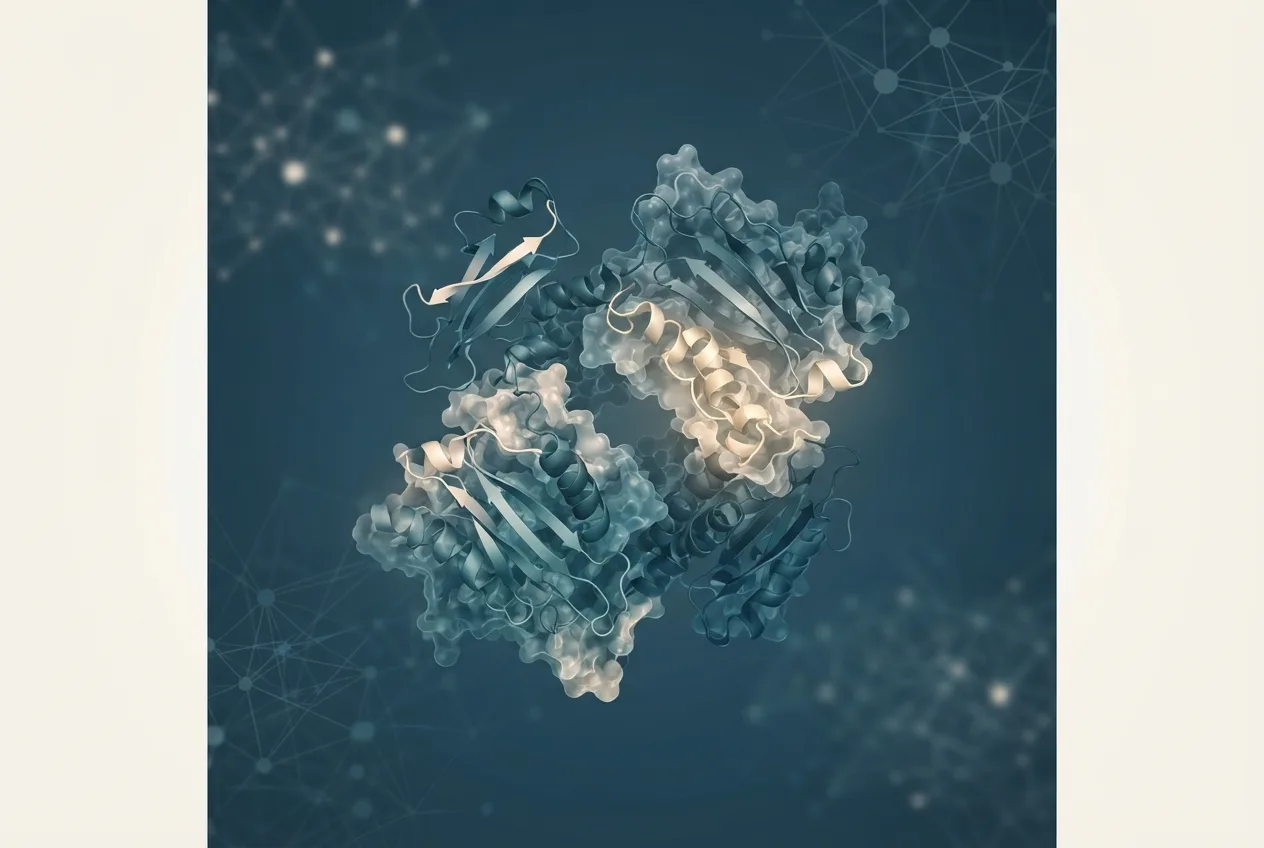
Have you ever wondered why you have brown eyes even though both your parents have blue? Or why a genetic disorder can skip a generation only to reappear in the next? The answer lies in one of the most fundamental concepts in genetics: recessive traits. In biology, a recessive allele is a version of a gene that can be masked by a dominant allele. But the full story is more nuanced and deeply practical for understanding inheritance, disease risk, and even biotechnology.
Let's break down what recessive really means, how it works at the molecular level, and why it matters in medicine and research.
Key Takeaways
- A recessive allele only manifests phenotypically when an individual inherits two identical copies (homozygous recessive, aa), whereas its expression is masked in the presence of a dominant allele (heterozygous, Aa).
- Recessive traits typically result from loss-of-function mutations producing non-functional proteins, while a single wild-type dominant allele produces sufficient functional protein to maintain normal physiology (haplosufficiency).
- In a standard Mendelian monohybrid cross between two heterozygous carriers (Aa × Aa), the expected phenotypic ratio in offspring is 3 dominant to 1 recessive (25% chance of expressing the recessive phenotype).
- Autosomal recessive disorders (such as Cystic Fibrosis or Sickle Cell Anemia) require both parents to be genetic carriers, meaning asymptomatic parents can pass the disease to offspring.
- X-linked recessive conditions (such as hemophilia and red-green color blindness) appear much more frequently in biological males (XY) because males possess only one X chromosome (hemizygous) and lack a homologous allele to mask recessive mutations.
The Core Definition: What Makes an Allele Recessive?
Every gene in your DNA comes in two copies, one from each parent. Different versions of the same gene are called alleles. A recessive allele is one that only shows its effect when an individual has two copies of it (homozygous recessive). If a dominant allele is present, it overrides the recessive allele’s instruction.
For a recessive trait to be expressed:
- You must inherit the recessive allele from both parents.
- If you inherit one dominant and one recessive allele (heterozygous), the dominant allele determines the trait. You become a carrier without showing the condition.
A classic example is the gene for colorblindness, which is X linked recessive. Males (XY) need only one recessive copy to be colorblind because they have only one X chromosome. Females (XX) must inherit two recessive copies to show the trait.
This simple principle governs countless human variations from attached earlobes to serious disorders like cystic fibrosis and sickle cell anemia.
Recessive vs. Dominant: A Practical Comparison
Understanding the difference is essential for interpreting inheritance patterns. Here is a quick reference table:
| Feature | Dominant Allele | Recessive Allele |
|---|---|---|
| Expression in heterozygote | Always expressed (produces trait) | Not expressed; masked by dominant |
| Genotype needed to show trait | One copy (heterozygous or homozygous) | Two copies (homozygous recessive) |
| Likelihood in population | Often more common if harmful (trait persists) | May remain hidden in carriers for generations |
| Example | Huntington’s disease | Cystic fibrosis |
The key takeaway: a recessive allele can pass silently through a family tree. Two unaffected carriers can have an affected child. This is why genetic counseling often focuses on recessive disorders in families with no prior history.
How Recessiveness Works at the Molecular Level
Why does a recessive allele fail to express when a dominant allele is present? The answer lies in protein function.
Most genes code for proteins. A dominant allele usually produces a functional protein, or at least one that interferes with the normal product. A recessive allele often produces a nonfunctional or partially functional protein. When one good copy of the gene is present, the cell makes enough normal protein to carry out its job. The defective protein from the recessive allele is simply outnumbered.
This concept is called haploinsufficiency in some cases, but for true recessive traits, it is about protein quantity. For example, in phenylketonuria (PKU), a recessive disorder, the enzyme needed to break down phenylalanine is missing only when both alleles are defective. A single functional allele provides enough enzyme to prevent disease.
In some cases, such as recessive alleles in bacteria or plants, the mechanism is similar: a functional gene product compensates for the defective one. Understanding this molecular logic helps researchers design gene therapies that deliver a working copy of the recessive gene.
Why Recessive Traits Matter in Modern Biology and Medicine
Recessive inheritance is not just a textbook concept. It drives real world applications:
- Genetic disease screening: Carrier testing for recessive conditions like Tay Sachs or spinal muscular atrophy helps couples understand their risk before pregnancy.
- Crop breeding: Recessive alleles for dwarfism or disease resistance are selected to create hybrid plants with desirable traits.
- Evolutionary biology: Recessive harmful alleles can persist in populations because they are hidden in heterozygotes, only exposed when two carriers mate. This maintains genetic variation.
- Personalized medicine: Knowing whether a disease is recessive versus dominant changes how clinicians predict onset, severity, and recurrence risk in families.
For example, the recessive CCR5 delta32 mutation provides resistance to HIV. People with two copies are highly resistant; heterozygotes have partial protection. This shows that recessive alleles can be beneficial too, challenging the notion that recessive always means defective.
A Quick Summary for Students and Professionals
- Recessive alleles require two copies for expression.
- Heterozygotes are carriers and do not show the trait.
- Recessiveness is due to insufficient functional protein from a single gene copy.
- Common recessive human disorders include cystic fibrosis, sickle cell anemia, and albinism.
- Recessive patterns appear as skipping generations in family pedigrees.
When you encounter a recessive trait in a problem set or a clinical report, remember: look for two affected parents or unaffected parents with an affected child. That pattern is the hallmark of recessiveness.
Understanding recessive meaning in biology gives you a powerful lens to interpret inheritance, disease, and even agricultural advances. It is a concept that connects DNA to daily life, from your own ancestry to the food on your plate.
Written by Zubair Khalid, DVM, MS, PhD, a molecular biologist and computational researcher sharing practical insights in bioinformatics and biotechnology.